Vietnam and War Archive



 H O M E |
 |
Vietnam Memorial Addition Denounced |
DNA Test Identifies Berkeley MIA |
Prof's Phony Vietnam Record Unmasked |
My Lai: The Seventh SEAL |
San Francisco to Get Vietnam War Memorial |
Vietnamese Witnesses Say Kerry's Squad Initiated Killing in '69 Raid |
Vietnam Woman Veteran Receives Soldier's Medal |
Obituary: Trinh Cong Son, Vietnam-era Antiwar Singer |
Wandering Vet Comes Home |
What Names Belong on the Wall? |
Heroes Return to My Lai |
US Vets Build Peace Park at Vietnam Massacre Site |
Blind Albert Sings of "11 Bravo... Viet Nam" |
Stamp Features Berkeley Vet |
Clinton Pardons Viet Vet in Drug Case |
E-commerce Mogul Bankrolls Vietnam Landmine Cleanup |
25 Years After the Vietnam War, Time Has Come to Rid Mall of Shacks | Pentagon To Reveal Names of 60s Biowarfare Test Subjects | CNN War Correspondent Speaks Out | 30th Anniversary of the Chicano Moratorium |Bobby Ross Launches New CD, Greyhound Tour |
Perseverance Pays Off for Conscientious Objector Author | The Painful Search for 300,000 Vietnamese MIAs | General Moorer's Testimony on Use of Sarin and Killing American Deserters
Vietnamese Women Since the War | Group Seeks Flower Donations to Honor 8,000 Korea MIAs | Viet General Who Whipped US Speaks Out | Babylift Orphans Observe Anniversary of Plane Crash | War Crimes Panel Examines Sex Case | Japanese American Memorial Debate Opens Old Wounds | Novelty Of Females Aboard Gone As Ike Returns To Sea | VVAW Update on Vieques | The Gypsies in Kosovo | "The War is Over" | Veterans' History On Display in Berkeley | A Poem | Landmines: The Vietnam Experience | Chechen Women During the War | Keeping Track of the CIA | Veterans Support Vieques! | "Healing Wall:" An Education for Younger Generation | Rod Kane, an Obituary | Not So Fond-a Jane, an exchange | Vietnam Veterans Against the War statement, 10/7/99 | Cold War Recognition by Mail! | Trent Anger's book on the hero of My Lai: a review | Bill Ehrhart's book on Vietnam
Vietnam Memorial Addition Denounced
Stephanie Nazzaro WASHINGTON - The man who led the effort to honor Vietnam veterans on the National Mall says he doesn't like a proposed addition to the memorial. On Thursday, Jan F. Scruggs, president of the Vietnam Veterans Memorial Fund, criticized as ``amateurish'' a plaque that would honor veterans who died long after the war ended. Last year, Congress directed the American Battle Monuments Commission to add a plaque to the existing Vietnam Veterans Memorial -- which now includes the Memorial Wall, two statues, and a commemorative flagpole. The plaque would acknowledge those who died from illnesses brought on by their time in Vietnam, such as cancers resulting from Agent Orange or deaths related to Post Traumatic Stress Disorder. The plaque would rest on a black granite pedestal and would read: ``In memory of American Veterans whose postwar deaths are attributed to their Vietnam War service.'' Scruggs dismissed the inscription as ``less than noteworthy'' and said the word ``attributed'' smacked of legalese. ``We want this plaque to be beautiful, we want this plaque to be appropriate. We certainly owe this to our friends being honored,'' Scruggs said. Scruggs and others also say more thought must be given to the proposed plaque location, which would be nearest the Lincoln Memorial entrance. An architect who works with the Memorial Fund says the placement gives the false impression that the plaque is the official dedication for the Monument Wall. In response to the criticism, the commission pledged to work more closely with the Memorial Fund on a new design. ``We want to get this right,'' said Executive Director Ken Pond. Supporters hope to dedicate the plaque next Memorial Day.
DNA Test Identifies Berkeley MIA
Benjamin Pimentel For the family of Winfield Wade Sisson of Berkeley, the painful mystery of the Marine captain's disappearance in Vietnam more than three decades is finally resolved. Two months ago, the family learned the truth with the help of DNA technology: the 28-year-old pilot was killed when his plane crashed into a mountain in October 1965. Pentagon officials released the identification this week. "It puts a chapter to rest," his cousin, Kim Sisson of Grand Rapids, Mich., said yesterday. "War is hell on families and people. He's always been in our minds. We didn't know what happened to him. We thought he was a prisoner all these years. It's been a big question mark in our life." The answer came after the U.S. military used DNA technology to determine the identities of human remains found more than 25 years after the crash. On Oct. 18, 1965, Sisson and Maj. Harley Pyles had completed a reconnaissance flight near Da Nang Air Base when their Cessna airplane ran into bad weather and crashed. Their unidentified remains were recovered in 1992 by a local resident who turned them over to U.S. military officials. It took almost nine years for the Pentagon to make a positive identification of both men with the help of DNA technology, which the military began using to identify missing servicemen only in 1995, said Larry Greer, a Defense Department spokesman on prisoners of war issues. Such testing is commonly used in confirming the identities of suspects in criminal cases. Today, DNA technology also helps verify the identities of about 40 percent of 200 to 300 missing servicemen every year, Greer said. Veterans rights advocate Michael Blecker of San Francisco said the new technology helps relatives of missing servicemen heal. About 1,900 U.S. servicemen are listed as missing in action in Vietnam, according to the Pentagon. More than 58,000 Americans died in the war. For years, Sisson's family struggled to find out what happened to him. His father, Winfield Wilbur Sisson, himself a former military officer who taught mathematics at the University of California at Berkeley, traveled frequently to Washington, D.C., hoping to get information. The elder Sisson later joined relatives of other missing servicemen who opposed the U.S. government's reclassification of their loved ones from missing to killed in action. Greer said the move was standard practice to allow the families of missing servicemen certain benefits, such as government insurance. But he said the Pentagon never stops looking for missing personnel. Sisson's father, who lived in Berkeley, died in 1995. His brother, Dr. Keith Sisson of Grand Rapids, received the younger Sisson's remains. Winfield Wade Sisson, who was later conferred the rank of colonel, will be buried at Arlington Cemetery next month. "I can remember my brother and this hope that he had that his son would walk through that door someday," Keith Sisson said. "Arlington would be very fitting." Winfield Wade Sisson was honored in his hometown six years ago when Berkeley city officials and folksinger Country Joe McDonald paid tribute to the city's 22 casualties whose names were inscribed on a plaque. Their stories are posted on a Web site, www.ci.berkeley.ca.us/vvm/ . "It must have been terrible for his father to endure this," McDonald, a former antiwar protester, said. "War injuries never seem to end. The sacrifices people make have repercussions that go on and on. This is a perfect example." E-mail Benjamin Pimentel at bpimentel@sfchronicle.com.
Prof's Phony Vietnam Record Unmasked
Associated Press SOUTH HADLEY, Mass. - A Pulitzer Prize-winning historian apologized for distorting his past, including claiming falsely that he served in Vietnam. ``I deeply regret having let stand and later confirming the assumption that I went to Vietnam,'' Joseph J. Ellis wrote in a statement released Monday evening. ``For this and any other distortions about my personal life, I want to apologize to my family, friends, colleagues and students. Beyond that circle, however, I shall have no further comment.'' Ellis, 57, became a popular professor at Mount Holyoke College in part by sharing his experiences in Vietnam - but he never went overseas, The Boston Globe reported Monday. Ellisalso embellished his involvement in the anti-war and civil rights movements, the Globe reported. The Globe did not question the historical integrity of Ellis' books. He won the 2001 Pulitzer for history for his best-seller ``Founding Brothers: The Revolutionary Generation.'' Among his other books are ``Passionate Sage: The Character and Legacy of John Adams'' and ``American Sphinx: The Character of Thomas Jefferson,'' which won the National Book Award in 1997. Mount Holyoke's administration stood firmly behind Ellis, and his colleagues responded with surprise to the report. Jeremy King, an assistant professor of history who has worked with Ellis for about five years, called him ``a man of the highest integrity.'' In an interview with the Globe last year, Ellis said he went to Vietnam in 1965 as a platoon leader and paratrooper with the 101st Airborne Division. In the same interview, he said his Vietnam service also included duty in Saigon on the staff of Gen. William C. Westmoreland, the American commander in Vietnam. After reviewing public records and interviewing some of Ellis' friends and colleagues, the Globe reported that the account was not true. The newspaper found he was commissioned an Army second lieutenant when he graduated from college in 1965, but his active duty was deferred four years while he was in graduate school. He then did his Army service by teaching at West Point from 1969 until 1972, the year he joined the Mount Holyoke faculty. Mount Holyoke President Joanne Creighton questioned the Globe's motivation and said the school is ``proud to have him on our faculty.''
My Lai: The Seventh SEAL
Nat Hentoff In view of the conflicting accounts of Bob Kerrey's Raiders allegedly killing unarmed civilians in Vietnam, CBS News' 60 Minutes rebroadcast, on May 6, a March 1998 program titled "Back to My Lai." Mike Wallace went back to Vietnam with gunner Larry Colburn and pilot Hugh Thompson, who, in a helicopter over My Lai in 1968, saw the massacre of civilians by American troops, and landing, threatened to open fire on those GIs to prevent any further murders. A third soldier, Glenn Andreotta, was also with them but was killed three weeks later. The leader of those war crimes on the ground was Lieutenant William Calley -- later convicted and sentenced to life in prison after Thompson and Colburn testified against him. After only three days in the stockade, Calley was placed under house arrest by President Nixon, who paroled him three years later. But, Mike Wallace recalled, "around the country, many Americans treated him like a hero." Wallace described, on-camera, what was happening before Thompson and Colburn intervened. The American troops, "who'd been told My Lai was an empty stronghold . . . burned down huts with their Zippo lighters." They marched 170 people into a ditch -- women, old men, babies -- and "gunned them down in cold blood." As Colburn said, "There were no weapons captured. . . . They were civilians." The Army tried to cover up My Lai, but Sy Hersh broke the story. On returning to My Lai in 1998, Hugh Thompson was approached by a woman who had been dumped into that ditch and survived, shielded by the bodies of the dying and the dead. She asked Thompson why he was different from those other Americans. Thompson -- who had a sidearm during the massacre, but took a chance and didn't draw it when he ordered the soldiers to stop the killing -- said to the survivor: "I saved the people because I wasn't taught to murder and kill." This year, after the story broke about what happened under Bob Kerrey's command in the village of Thanh Phong, Hugh Thompson appeared on the O'Reilly Factor on the Fox News Network. Bill O'Reilly asked Thompson: "What went through your mind when you saw what was happening on the ground at My Lai?" "Hitler," Thompson said. But, with regard to Kerrey's Seven SEALs, couldn't Thompson understand why, under such stress and fear, these soldiers, in the dark in a free-fire zone, would have snapped? "Yes," Thompson answered, "without proper leadership." In 1998, when Thompson and Colburn were back at My Lai, Mike Wallace asked Colburn, "Why did it happen? Why did these guys lose it?" "I think," said Colburn, "they had some inept, incompetent leaders on the ground that day." He added: "There's a big difference between killing in war and murder, cold-blooded murder." My Lai was clearly a war crime. But what about the civilians killed by Kerrey's Raiders? Answering that question posed by Bill O'Reilly this year, Hugh Thompson referred to the one member of Kerrey's team, Gerhard Klann, who says that in the village of Thanh Phong, he and the rest of Kerrey's Raiders also slaughtered civilians -- some 15 women and children (last week I erred in saying they were only children). "If Gerhard Klann's story of what happened at Thanh Phong is true," Hugh Thompson said, "that is no way to treat prisoners of war. It would be a war crime." For his own role in stopping a war crime, Thompson received death threats from veterans who didn't want the story told. On the night of 60 Minutes' rebroadcast of "Back to My Lai," Andy Rooney, who still believes Kerrey is a hero because he "risked his life for his country in Vietnam," nonetheless honestly admitted that when Dan Rather interviewed Kerrey on the May 1 60 Minutes II, "I was on Kerrey's side, but it didn't seem to me he was always telling the whole truth." It didn't seem that way to me either. And it was clear to me that Gerhard Klann was telling the truth. Not only the way he looked throughout his testimony, but the fact that he was voluntarily incriminating himself as a participant in an atrocity that may well have been a war crime. But five of the Kerrey Raiders, after years of silence, did sign a statement supporting Kerrey's account -- and not Klann's. On April 30, the New York Post reported that Kerrey had those five members transported to New York "from all over the United States." The five SEALs on that raid (along with staffers from "a PR agency . . . doing damage control for Kerrey") were put up, said the Post, at an East Side hotel. Later, at Kerrey's home, "the group met until 2 a.m., thrashing out a consensus of what they say happened" that night in 1969. "By late Saturday afternoon [before the Times and 60 Minutes stories broke], Kerrey was emboldened," the Post continued, "to claim that sections of the media were involved in a conspiracy against him." Kerrey's exact words to the Associated Press: "The Vietnamese government likes to routinely say how terrible Americans were. The Times and CBS are now collaborating in that effort." That sure sounds like a public relations press release. The high-powered PR star, John Scanlon, who died suddenly of a heart attack recently, told a friend that he was "giving advice" to Kerrey. The May 7 Time magazine also reported that on April 27, the five Navy SEALs "dined at Kerrey's house and talked the raid over for the very first time." The next evening, they issued "a statement of facts." It should be noted that Gerhard Klann, who works in a steel mill in Butler, Pennsylvania, could not have afforded a public relations adviser. The gathering of the five Kerrey's Raiders, and their subsequent unanimous statement affirming their leader's story, reminded me of New York City's 48-hour rule, by which whenever one or more cops are accused of a particularly brutal action, they're given 48 hours during which they don't have to speak to anyone -- including Internal Affairs investigators from the police department. That grace period allows the accused to orchestrate a common explanation of what they will say happened. It doesn't look as if the Pentagon will investigate what did happen that night in Thanh Phong. But I believe the report of the Seventh SEAL.
San Francisco to Get Vietnam War Memorial
Louis Freedberg
More than a quarter-century after it ended, San Francisco will finally get its own memorial to the Vietnam War: a simple 24-inch by 48-inch bronze plaque listing the names of 163 San Franciscans who died in a miserable, uncelebrated war. The plaque will be unveiled tomorrow at 12:30 p.m. in Justin Herman Plaza at the foot of Market Street. Mayor Willie Brown will be there. He is expected to apologize for the city's delay in honoring its war dead.
The time it has taken to erect the plaque, as well as its modest proportions, reflect the cross currents of emotions that swirled around the war while it was taking place, and still haunt those who served in it and suffered because of it. Most other cities have been able to move beyond the passions of the time, and have found a way to memorialize what happened a generation ago. There's the granite wall of names, the Vietnam Veterans Memorial, splitting the earth between the Washington Monument and the Lincoln Memorial in Washington, D.C. There is an elaborate memorial on the State Capitol grounds in Sacramento. Even Berkeley has gotten it together to put up a memorial. But not San Francisco. "We decided that it was indecent nothing was being done," said Michael Blecker, director of Swords to Plowshares, a San Francisco social service agency that works with homeless Vietnam veterans and other troubled veterans of the war. The group raised $4,000 to cast the plaque. Most war memorials are inscribed with tributes "in honor of those who died serving their country." They usually make some reference to how fallen GIs "gave their lives to achieve freedom and liberty." In San Francisco, life and death are not so simple. Coming up with the exact wording on the plaque required rehashing all the arguments for and against the war. Blecker and some of his fellow vets didn't want the monument to give the impression that the war "served" the United States in any way. "We wanted to make sure we were honoring the people who fought the war, not the war itself," he said. Some vets pushed for the monument to express their unabated disgust with the war. But phrases like "These young men were used as cannon folder in a shameful war" were ruled out as inappropriate. "It was important for us," Blecker said, "to separate our feelings about the war from our feelings about the warriors who were caught in that bloody business. We wanted the memorial to be a healing force." At the same time, memorial organizers rejected making any reference to San Francisco's native sons dying in the struggle for "freedom." "The war did not achieve freedom and liberty for anyone," Blecker said. After much back and forth, the veterans agreed on the following carefully chosen statement: "In honor and remembrance of San Franciscans who served our country and who died in the Vietnam War." Blecker, who went to Vietnam as an infantryman in the 101st Airborne in 1968, said the debate over the wording touched on unresolved questions about the war: "Do we commemorate it? Are we angry about it? Are we responsible for the bloodshed?" He said his organization has been too busy -- providing counseling, education services and housing to Vietnam veterans -- to think about erecting a monument to the war until recently. "Ours was a living monument," said Blecker. "Every day we see 60 to 80 guys from the war, and their lives are wrecks. I'm not saying it was all due to the war, but the war certainly didn't help." For decades, families and friends of the victims of Vietnam have suffered mostly in silence, and in isolation. So far, memorial organizers have only been able to track down the relatives of eight of the 163 GIs whose names appear on the San Francisco plaque. Where and who are the others? Compare their invisibility to the public embrace of the relatives of victims of the TWA plane crash, the Oklahoma City bombing or the Columbine shootings. For the families of our Vietnam dead, there were no stirring memorial services, no consoling words from the president on the White House lawn, no appearances on Oprah or Nightline. It is time to urge the families of the war dead to come out of the shadows, and for us to embrace them and to honor their continuing sacrifices. The modest memorial in Justin Herman Plaza provides that long overdue opportunity.
For more information on the memorial, call 415-252-4787 ext. 343.
Vietnamese Witnesses Say Kerry's Squad Initiated Killing in '69 Raid
Rajiv Chandrasekaran THANH PHONG, Vietnam -- The underground bunker, once wide and long enough to sleep two dozen people, has collapsed and filled with dirt. A copse of banana trees and the household debris from two nearby huts cover the Hula-Hoop-size hole through which peasants in this tiny Mekong Delta village would slither to hide from U.S. or South Vietnamese troops. No sign or plaque notes the carnage that occurred here on a February night 32 years ago, when a seven-member Navy SEAL team, led by Lt. Bob Kerrey, crept into Thanh Phong to raid a meeting of local Viet Cong leaders. They never found the meeting, but by the time the elite commandos left the hamlet, more than a dozen unarmed women and children lay dead near the entrance to the bunker. More dead fell nearby. Former senator Kerrey, who was awarded a Bronze Star on the basis of a false report that his squad killed 21 Viet Cong in the attack, has recently acknowledged that his unit killed women and children that night in a confluence of events he has called "an atrocity." Kerrey and five of his team members have maintained, however, that they shot at the villagers, who were about 100 yards away, only after receiving enemy fire. A former Viet Cong fighter who lives in the village told The Washington Post on Saturday that there were Communist officials in Thanh Phong that night, including a local leader who presumably was the target of the SEAL mission. But the former fighter, and two women who claim to have witnessed portions of the operation, described in interviews on Saturday a version of events very different from Kerrey's, although their stories have some inconsistencies. One of the witnesses, Bui Thi Luom, who was 12 at the time, said the Americans ordered her and the 15 other people who were in the bunker to crawl out and sit together on the ground. Then, after admonishing a woman not to cough, the commandos opened fire from close range on the group, which included her grandmother, a pregnant aunt and three younger siblings, Luom said. "I thought they would let us go after they saw we were only women and children," said Luom, who said she managed to slip back into the bunker just as the shooting began. "But they shot at us like animals." Luom said nobody fired on the Americans before they initiated the fatal barrage. She and another woman in the village who said they saw part of the attack insisted that there was no Viet Cong activity in Thanh Phong that night. The former Viet Cong guerrilla, Tran Van Rung, said in a separate interview that about five local Viet Cong officials were there, gathered in a bunker about a quarter-mile from Luom's. Rung said the members of the group, which included the senior Viet Cong leader in Thanh Phong who likely was the target of Kerrey's mission, were sleeping when they heard gunfire. Rung, 53, who spoke to a foreign journalist for the first time on Saturday, said he was one of 11 guerrillas assigned to protect the leaders. He insisted that all the Viet Cong fighters in the village were stationed in and around the leader's bunker and that none of them fired on the SEALs. "We didn't leave the bunker," he said, sipping green tea in front of a neighbor's house. "We didn't provoke the Americans." Armed only with bolt-action rifles and a few grenades, Rung said, the 11 fighters did not attempt to respond to the gunfire because they believed they would have been "no match for the Americans." A spokesman for Kerrey, Michael Powell, said yesterday that "the fact that he said there were Viet Cong in that village that night merely confirms what Kerrey and his SEAL teammates have been saying all along: that this was a dangerous mission. Their intent was to take out those Viet Cong, not the people who were ultimately killed." The killing of civilians by Kerrey's unit was first reported by the New York Times and the CBS News program "60 Minutes II," which jointly conducted a 2 1/2-year investigation into the incident. The Times and CBS interviewed a member of Kerrey's team, Gerhard Klann, whose recollection of the raid is similar to the accounts of the two Vietnamese women. Kerrey, 57, a Nebraska Democrat who left the Senate in January after two terms and now is president of the New School University in New York, has vehemently denied Klann's description. "No one else in the squad has that memory," Kerrey said. In response to questions from The Post yesterday, Powell added that "Bob never gave an order to round up villagers and execute them. That would have been a war crime." In a speech to ROTC candidates at Virginia Military Institute last month, however, Kerrey acknowledged using "lethal procedures when there was doubt." "It was a tragedy, and I had ordered it," he said. "Though it could be justified militarily, I could never make my own peace with what happened that night. I have been haunted by it for 32 years." An Elusive Enemy Kerrey, who arrived in Vietnam as a 25-year-old lieutenant, was fond of telling people that he wanted to serve with "a knife in my teeth." His SEAL team, unofficially dubbed Kerrey's Raiders, was inexperienced but eager, embarking on the Thanh Phong raid after just a month in the country. SEALs (which stands for Sea, Air and Land units) are the Navy's best of the best, the toughest of the toughest, trained to spend hours underwater and operate covertly behind enemy lines. In Vietnam in the late 1960s, the commandos' task was to skulk through the rice paddies and dense woodlands of the Mekong Delta to kidnap and kill leaders of the National Liberation Front -- known as the Viet Cong -- the communist insurgency that sought to overthrow the U.S.-backed South Vietnamese government. Although SEAL teams were small -- seven men were about average -- they carried an arsenal of firepower. Kerrey's unit, for instance, was armed with M-16 assault rifles, knives, 9mm handguns, grenades and grenade launchers, and disposable rocket launchers similar to bazookas. They used all those weapons that night in 1969. The Viet Cong were an elusive enemy. They wore the same black pajama-like garments as farmers. Their ranks included women and children. During the day, they would join other peasants toiling in rice paddies. At night, they would silently troll through the jungle, hiding in an extensive network of tunnels and bunkers from where they would launch pinprick attacks on U.S. and South Vietnamese forces. For the SEALs in particular, gathering intelligence about the location of Viet Cong leaders they hoped to kill proved an extremely frustrating experience, with a high failure rate. "It was literally pin the tail on the donkey," said a former SEAL who served in the Mekong just before Kerrey arrived. "Half the time you ended up in the wrong place. And even if you got to the right place, it might have been the wrong time." Located about a mile from the South China Sea and even closer to one of the delta fingers of the mighty Mekong River, Thanh Phong was a strategic outpost for the Viet Cong. Beginning in 1964, it was a key delivery point for weapons and supplies from North Vietnam that were distributed along rivers and jungle trails to guerrillas across the South. The poor farmers and fishermen who lived in Thanh Phong, about 60 miles south of Saigon, now Ho Chi Minh City, were mostly Viet Cong, according to residents here. The Americans and South Vietnamese made the entire area a "free fire zone," where U.S. and South Vietnamese troops were authorized to fire on anyone they encountered. This created a Wild West-like shooting gallery, which prompted many villagers, even those who were not active in the guerrilla movement, to dig bunkers near their bamboo-and-palm-frond huts. Kerrey's unit first came here on Feb. 13, 1969, to look for the senior Viet Cong leader in the area, known as the village secretary. At the time, the surrounding area was part of the U.S. 9th Infantry's Division's "Operation Speedy Express," designed to eliminate the entrenched Viet Cong. According to a 1972 investigation by Newsweek, thousands of civilians were killed in the operation. On that visit, Kerrey's team interrogated several residents about the secretary's whereabouts, but departed without gleaning much information. The squad returned on the night of the 25th, prompted by new intelligence reports indicating the secretary would be there. Arriving on a swift 50-foot, aluminum-sided boat from their base at the port of Vung Tau shortly before midnight, the SEALs crept toward the village. But as they neared Thanh Phong, they encountered a "hooch" -- a peasant hut -- that wasn't included in their intelligence report. Inconsistent Accounts Pham Thi Lanh said she climbed out of her bunker as soon as she heard the first scream. Lanh, who was 30, thought the noise came from an elderly couple's hut nearby. She said she gingerly approached and hid behind a clump of banana trees. From there, she said, she saw "the American troops" nearly decapitate the couple, Bui Van Vat and his wife, Luu Thi Canh. According to the headstones on their graves in the village cemetery, he was 65 and she was 62. "I saw the troops cut their necks," Lanh said. "They cut almost all the way through." Lanh said she then ran back to her bunker, where her four children were sleeping. She said she stuffed their mouths with cloth to keep them quiet. The elderly couple had been living with three young grandchildren, whom villagers found stabbed to death the next morning. Although Lanh earlier said she witnessed all five killings, she said on Saturday that she had seen only the first two. She contended, however, that she heard the grandchildren being stabbed. Lanh, who cuts wood for a living, told "60 Minutes II" that her late husband was a Viet Cong fighter, but she recanted that assertion in subsequent interviews. Government officials arranged the interviews with Lanh and others in Thanh Phong. They were attended by a provincial officer and a Foreign Ministry representative, who served as an interpreter. Lanh and Luom provided a similar account to a group of foreign journalists who were allowed to visit the village on April 28. Lanh's version of the killings at the hooch is similar to the one Klann provided to the Times, in which he said an older man, a woman about the same age and three children under 12 were stabbed to death. Kerrey, who has said that he did not look inside the hooch or participate in those first killings, said his team told him that there were five men in the hut -- all of whom were killed. He and his supporters question Lanh's account, noting her shifting story and the fact she initially said she was married to a Viet Cong fighter. Kerrey and the other squad members besides Klann issued a statement in which they said they worried that the hooch may have been a warning post, so they resorted to "lethal methods to keep our presence from being detected." After dispensing with the first hooch, the squad made its way to the center of the village. Everyone, including Kerrey, has given inconsistent accounts about what happened from then on. In the statement, Kerrey and the five other SEALs said they "took fire" from enemy forces. Kerrey has estimated that the team was about 100 yards from the hooches, at the village center, when the shooting started. But in one of his interviews with the Times, Kerrey said he could not be absolutely certain that shots were fired. "I don't know if it's noise," he said. According to an "after-action report" kept by the Naval Historical Office, presumably based on a report filed by Kerrey when he returned to base, the commandos returned fire, blasting 1,200 rounds from their M-16s, 12 rocket-propelled grenades and two bazooka shells in the direction from which the shots seemed to come. In his interview with the Times, Kerrey said he and his squad eventually made their way to the cluster of hooches. "I was expecting to find Viet Cong soldiers with weapons, dead," he said. "Instead I found women and children." But in the statement, the members of the group provided a different account, saying that they "withdrew" from the village "while continuing to fire." Kerrey has described the night as black and moonless, but witnesses said they remember dim moonlight that allowed for limited visibility. According to records kept by the U.S. Naval Observatory, a partial moon -- a 60 percent disk -- was out until 1:30 that morning, an hour after the squad reported leaving the village. The descriptions provided by Luom and Klann about how the women and children died are different, and both are markedly at odds with Kerrey's. Klann contends that the team rounded up women and children from a group of hooches on the fringes of the village and interrogated them about the whereabouts of the village secretary. Luom, however, said all the women and children who were killed came from one bunker. She said the SEALs ordered everyone to exit the shelter and sit in a tightly packed group near the entrance. Seeing that the SEALs were not about to let the villagers go, Luom said her grandmother began pleading for mercy. A few seconds later, she said, the firing began. The Americans were about three feet away when they started shooting, she said. Klann said Kerrey gave the order to shoot the women and children, and that the firing began with the soldiers standing between six and 10 feet away. Klann said the squad decided to kill the villagers because they felt they could not take them as prisoners and they worried that if they let them go, they might alert Viet Cong fighters before the team was safely on the boat. Kerrey and the other members of the unit have disputed Klann's account. Kerrey's spokesman, Powell, said yesterday that the team started shooting only after receiving fire from the village. Luom said she escaped being killed by jumping back into the bunker just before the shooting started. "I have no idea how I got down into the bunker so fast," she said. "Maybe God blessed me to be a survivor." Luom, who now lives in a nearby village, said she had not heard about the controversy over the killings until a week ago, when she met with foreign journalists. She said she does not read newspapers because she is illiterate and does not watch television because she spends most of her time working on a fishing boat. As a condition of the interview, the Vietnamese government required The Washington Post and the Associated Press to jointly pay for Luom's travel costs from her offshore fishing boat to Thanh Phong -- about $30. Today, this village is home to about 350 families, and is surrounded by verdant rice paddies, palms and banana trees. Most people grow rice or work on shrimp farms. Electricity came a few years ago, allowing a few prosperous families to install television sets. Until a week ago, nobody talked much about what happened in February 1969. "This sort of thing was very common during the war," said Vo Ngoc Chau, a fisherman and former Viet Cong guerrilla who still walks around with a green military helmet. "There were so many innocent people who were killed." No one here spoke angrily about the United States. "There was a time when I wanted to take revenge on Americans," Luom said. "I bore a lot of hatred toward them." Now, she said, she would just like an acknowledgment of responsibility. "They should admit what they did," she said. "And they should apologize to us." Staff writers Robert G. Kaiser and Michael Grunwald in Washington contributed to this report.
Vietnam Woman Veteran Receives Soldier's Medal
Noonie Fortin Karen Offutt was presented The Soldier's Medal today (Saturday 7 April 2001) at a ceremony in Edward Medard Park east of Tampa. She was taken totally by surprise. She was one of the scheduled speakers at the Women's Museum Tent. She showed up in the morning-thankfully-and listened to the morning speakers. Following a break for other park activities Karen was the first to speak during the afternoon session. She gave a marvelous rundown of her activities both in and out of Vietnam. And included her health problems as well as those of her children and grandchildren. When Karen finished speaking, Linda "Scooter" Watson approached her with a little dog tag pin and certificate of appreciation for being there today. BUT Scooter said, "I'm sorry Karen I made a mistake on your certificate spelling your name" and ripped it up. Karen was flabberghasted --then Scooter yelled out "Color Guard." Next thing to happen was a color guard from the DAV appeared out of nowhere-and Karen is still standing there looking like Scooter was crazy. To say the least the next thing that happened was a young Jr ROTC cadet came forward with a board of photos for Karen. Still she didn't realize what was happening. When Shirley from Congressman Bilirakis' office walked towards her-she finally noticed something was amiss. She broke into tears--as did most of the people in attendance. Scooter introduced Shirley to the audience and then Shirley turned to Karen. Shirley commented about what Karen had done in Vietnam to save several Vietnamese families from a fire in their building--never thinking of her own safety. How the hamlet chieftain wrote documents after talking to all the witnesses and those who were saved. He presented his documents to the US Army. A request for The Soldier's Medal was submitted through channels but denied. Reason being was that she was a woman and women didn't get awards for heroism. The request was downgraded to a Certificate of Achievement. That was in January 1970. Shirley reiterated all of this to the audience. Then she read the citation for the award of The Soldier's Medal. AND handed the Medal to Karen. The citation reads: Soldier's Medal Karen I. Offutt (Then) Specialist Five, United States Army For heroism not involving actual conflict with an armed enemy: Specialist Karen I. Offutt, Women's Army Corps, United States Army, assigned to Headquarters Military Assistance Command Vietnam, J47, distinguished herself by heroic action on 24 January 1970 while in an off-duty status. Observing a fire in Vietnamese dwellings near her quarters, she hurried to the scene to provide assistance. Without regard for her personal safety and in great danger of serious injury or death from smoke, flames, and falling debris, she assisted in rescuing several adults and children from the burning structures. Without protective clothing or shoes she repeatedly entered the buildings to lead children that had reentered their homes to safety. She continued to assist the Vietnamese residents in removing personal property and livestock, although danger increased until firefighting equipment and personnel arrived. Specialist Five Offutt's heroic action reflects great credit on herself, the United States Army, and the United States mission in Vietnam. Karen had absolutely no idea this was going to happen. She never noticed the TV cameras in the crowd. She was completely surprised. AND when it was pointed out that one of the men (Mike Castle) who worked so hard to get her the medal was part of the color guard she really lost it. He and his wife flew in from Minnesota just for the day. She began looking immediately for Joe Oliver who was also working to this end but sadly he couldn't get to Tampa. Some of us women and a few men knew this was going to happen today. We told a few folks but asked that they not tell Karen. Thank you for that. She absolutely had no idea. Even following the afternoon speakers program, Karen said I just can't believe this happened. She wanted to know how we kept it from her. It was hard. We nearly slipped several times but we did pull it off. I'm sure when she gets home many of her friends will hear from her. I spent time with her afterward and just kept saying I can't believe this really happened. She didn't think for one minute that the medal would be awarded to her for something that happened so long ago. Karen has been seen on television in several interviews. She has been written about in several books already. She is also in my next one (Women At Risk: We Also Served) and now I have an even better ending for the chapter I wrote about her. She has felt that it has become her mission to tell others that they need to pass on their history and health background to others to help them all understand about the problems our Vietnam Veterans are having. AND it's not just the male Veterans. I was proud to be a part of today's presentation. No, I didn't really take part in it but I was the first to be told by Joe Oliver that this was to happen today. I had to make arrangements with Scooter to get everything in place for the presentation to happen today. She did a good job of it too on such short notice. Mike Castle and his wife were flown in from Minnesota to take part. They had never met Karen before but had worked along with Joe Oliver to right a wrong. These two men need to be congratulated as well. You did good guys! More of the events of this week and weekend will be found in The Sarge section of Military Network. Copyright 2001 by Noonie Fortin. All rights reserved.
Obituary: Trinh Cong Son, Vietnam-era Antiwar Singer
Seth Mydans BANGKOK, April 4 Trinh Cong Son, an antiwar singer and songwriter whose melancholy music stirred Vietnamese on both sides of the war, died on Sunday and was buried today at a Buddhist temple near Ho Chi Minh City. He was 62. His family said he had diabetes after years of periodic hospital visits. Residents said thousands of mourners thronged his home, piling bouquets around it. With his focus on human emotions and his refusal to conform to official dogma, Mr. Son suffered pressure from both the government of South Vietnam, where he lived during the war, and the victorious Communists, who sentenced him to four years of farm labor and political education when the war ended. But his popularity won out and his music endured; in the last years of his life he was tolerated and even embraced by the government. His songs are widely performed both in Vietnam and among Vietnamese overseas. "Crying for Trinh Cong Son," read the headline over a full-page tribute in the daily youth newspaper Thanh Nien this week. "Truth, innocence and beauty in Son's songs surpassed all hostility," the newspaper said. In his last years he took up painting as well as songwriting and was a fixture, with his friends and his bottle of Scotch, at a cafe in Ho Chi Minh City, the former Saigon. "Now, really, I have nothing to protest," said Mr. Son in an interview last April on the 25th anniversary of end of the war. "I continue to write songs, but they concern love, the human condition, nature. My songs have changed. They are more metaphysical now, because I am not young." Mr. Son's popularity was at its height during the war years in the 1960's and 1970's when his songs propelled the careers of some of the best-known South Vietnamese singers. He became known internationally as the Bob Dylan of Vietnam, singing of the sorrow of war and the longing for peace in a divided country. Almost everybody knew the words to songs like "Ngu Di Con" ("Lullaby"), about the pain of a mother mourning her soldier son: "Rest well my child, my child of the yellow race. Rock gently my child, I have done it twice. This body, which used to be so small, that I carried in my womb, that I held in my arms. Why do you rest at the age of 20 years?" Because of what it called "defeatist" sentiments like these, the South Vietnamese government tried to suppress Mr. Son's music which flourished underground and was also listened to clandestinely in the North. When the war ended in 1975, Mr. Son refused to flee like many other southern Vietnamese including most members of his family. Along with tens of thousands of other southern Vietnamese who remained, he was sentenced to a period of "re-education." Born the eldest of seven children and trained as a teacher, Mr. Son never married. His siblings fled to Canada and the United States after the war, and since the death of his mother a few years ago he has been the only one of his family in Vietnam.
Wandering Vet Comes Home
Kathleen Sullivan When John Clinton wrote home for the first time in 20 years, he didn't put a return address on the envelope. But he threw in a few clues, just in case his elderly parents -- or his three sisters and two brothers -- wanted to find him. "I live in a military barracks or officers quarters in a military base which is now a national park," he wrote. "I am getting medical care at a military hospital in the Bay Area. From my bedroom window I can see a lot of the Bay Area -- Marin County and the Golden Gate Bridge." Instead of a return address, Clinton, 58, wrote "Sweet Thing," a name he had jokingly adopted when he was young, and included on letters he wrote when he served on a Navy supply ship in the 1960s. "It is hard for me to write, so I print instead," he wrote in neat letters printed on lined paper. Clinton, a self-described loner, said time slipped away as he knocked around the country, working at one job and another. By the time he decided to write his family, two decades had passed. The letter arrived the day after Christmas at his childhood Kentucky home on Ash Street in Louisville. His parents no longer lived there, but his youngest sister, Rita Williams, had moved in with her family. Williams' husband plucked the letter out of the mailbox and called her at her sister's house, where she was visiting. "Sit down, I think I have some good news," he told her. "I have a letter in my hand. I think it's from Johnny. Do you want me to open it?" There was no salutation, just a quote from the James Dean movie "Rebel Without a Cause." "Don't scream, Don't cuss and Don't Faint," Clinton had written. Williams, 37, said tears came to her eyes as her husband read the letter, which was signed "Love For Ever, Sweet Thing." The next day, brother George Clinton, 57, sat down at a telephone with the "clues" and maps of the United States and San Francisco. "I just started calling people out there (in the Bay Area)," he said. "Each person gave me somebody else to call." He called the Veterans Affairs hospital in Palo Alto. Someone at the VA hospital in San Francisco suggested calling Swords to Plowshares, a veterans advocacy group on Market Street. A staff member there referred him to its Veterans Academy, a residential education and job-training program for homeless veterans in the Presidio, once an Army base, now a national park. That's where -- the same day the letter arrived in Louisville -- George Clinton found his big brother. "Is it possible you can get a message to him?" he asked Phu Nguyen, manager of the facility, which houses 100 veterans. HAPPY TO TAKE A MESSAGE Nguyen said he had seen John Clinton return to the academy only a short while earlier. He would be happy to deliver a message -- in person. "You mean he's there?" an incredulous George Clinton asked. "I couldn't believe it. After 20 years, he's there." Nguyen walked upstairs and knocked on the door of 318-B. "It wasn't five minutes later Johnny called," George Clinton said. Williams headed to the nursing home to tell their mother. She wasn't sure Iveta Clinton, who was suffering from Parkinson's and Alzheimer's diseases, would understand -- though everyone knew she had long ached for word from her firstborn and spoke of him often as her condition worsened. "What would you say if I told you we found Johnny?" Williams asked her mother. "What would you want me to do -- smack him?" Her mother looked straight into Rita's eyes. She pointed a finger at Rita as if to say: Don't you dare. "Do you want me to hug him," Williams continued. Her mother smiled. "No," Iveta Clinton jokingly replied. "Kick him in the butt." "For that brief moment of time, she came out of that state she was in," Williams said. "Even though Mom wasn't there totally, she knew. If she had one last wish it would have been to see Johnny." Two days after talking to his brother on the phone, George Clinton boarded a Greyhound bus bound for San Francisco. When he arrived, he took his brother John back to Louisville for a two-week visit. "We had a good time coming home," George Clinton said. "They called us 'the brothers' on the train." A VISIT TO AGED MOTHER The prodigal son returned to his 76-year-old mother. During that January visit, John Clinton spent time with his father, now 84, who lives with Clinton's sister, Karen Johnston, and her family in a log cabin they built in the country. Clinton found out he was an uncle -- and a great-uncle. He found out his family had tried in vain to find him over the years. He also found out he had a home. "George told me: The whole top floor of my house is yours," Clinton said. Last week, a Clinton family delegation -- father John, brother George, sister Karen and brother-in-law William "Buddy" Johnston -- pulled up at the Veterans Academy in the Presidio in George Clinton's custom Ford van. They'd come to take him home. Clinton, who had moved into the academy soon after it opened in mid-August, will leave behind a few of his possessions -- a small table, two chairs and a tall black bookcase. He's donating them to the academy. "I love this place," he said, during a recent interview in the academy's dining room. "This is a place for people who want to get their act together and to get their life together. The counselors here will help you with just about anything they possibly can." Clinton said he needed to learn how to get along with people. "Basically, I've been a loner all my life," he said. "For exercise I read a lot and take walks along the bay," he had told his family in his letter. Clinton decided "out of the clear blue sky" to contact the family he had last seen at his parents' 40th anniversary party. LIFE OF A DRIFTER Years had drifted by as Clinton traveled around the country -- Chicago, San Francisco, Atlanta, Nashville, St. Louis. He'd driven a taxi. Worked as a photographer's assistant. Trucked antiques to small-town shows. Worked in a warehouse. Cooked and cleaned in restaurants. "Everywhere I went, I worked," he said. "You don't have to starve. You don't have to go around without money in your pocket." In his letter, Clinton described some health problems he was facing. "Imagine my surprise when I was told I have osteoarthritis or joint decay of the knees, shoulders, fingers and lower back. "No more hiking in the mountains or panning for gold. Over a period of time it will probably get worse," he had written. "Sitting at round table panel meetings with veterans and doctors and case workers, I have discovered that a lot of problems in my past life were due to minor depression, which I'm also being treated for." In his letter, Clinton shared some insights he had gained into his own personality -- not to make excuses, he had written, but to explain what he had learned about himself. His family responded with concern, love and generosity. "They offered right away to send me money," Clinton recalled. "I said: 'No, no, no, no.' They wanted to take me out shopping. I said: 'No, I'm fine.' They didn't know I just got on disability. That they didn't know." Mary Ann Williams, a counselor at the academy, said the Clinton family's response demonstrates what is best about families. Even as she had worried about what the family's reaction might be, she had encouraged Clinton to write, knowing that it came from a deep desire to reconnect. "Hey John, nothing ventured, nothing gained," she remembered telling him. "You could spend the rest of your life sitting around wondering what they'd say. Do it. Then you've done your part." She said Clinton was "beside himself with joy" for weeks after he returned to the academy from Louisville. EMBRACED BY HIS FAMILY "That family embraced him," Williams said. "He was theirs." When Clinton gets home, he plans to start searching for his 29-year-old daughter, Karen Marie. She was born in San Francisco, and he hasn't seen her since she was 4. Rita Williams said she was surprised at how quickly her brother had opened his arms to the family he had kept so long at bay. They had two big gatherings during his visit earlier this year -- one in Louisville and another at his sister Karen's log cabin. "We weren't sure if it would be too much for him to get everybody together, " Williams said. "But he loved it." It may be the start of a new tradition in the Clinton family. "One thing Johnny said to me: 'I wish everybody would get together once or twice a month,' " George Clinton said. "That's exactly what he said. I guess because it's something that he missed out on all this time." Copyright 2001 SF Chronicle
What Names Belong on the Wall?
Reference Desk Most Americans too young to remember the Vietnam War have come to think of all the names listed on The Wall as being combat deaths. Only when researching the thousands of Americans eternally remembered on The Wall do younger Americans learn that many of those deaths were non-combat related. Some died of disease, suicide, accident, or health problems incurred before arriving in Vietnam. In recent years new names were added to The Wall, and each year the Vietnam Veterans Memorial Fund receives additional requests to add new names to The Wall. Most of these are Vietnam veterans who succumbed to medical problems derived from their Vietnam War service. In April 2001 seven American servicepersons aboard a Russion Mi-7l transport helicopter lost their lives while researching possible burial sites of Americans still missing from the Vietnam War. The helicopter crash has so far been ruled an accident. Some Vietnam veterans are recommending that the names of the seven recent Vietnam casualties be listed on The Wall since their deaths were Vietnam War related. Other Vietnam vets disagree, saying that The Wall should honor only those who died in Vietnam during the war, or later as a direct result of their war-related military service. While others say that a new memorial site, similar to the Three-Soldier and Women's statues, be built and established near The Wall to honor post-Vietnam War related casualties such as the April 2001 accident. Your thoughts are invited at URL... http://home.pacbell.net/veterans/thewall.htm -- Reference Desk
Vietnam War Resource Guide -- http://members.aol.com/veterans/warlib6v.htm
Heroes Return to My Lai
Rathavary Duong MY LAI, Vietnam (Reuters) - Do Ba is now 42, but to Larry Colburn he will always be the 9-year-old boy he saved from the most notorious massacre of the Vietnam War. And to Ba, Colburn will always be a second father. Friday, 33 years to the day after a company of U.S. soldiers ran amok in the central Vietnamese village of My Lai, killing some 500 people, the two shared an emotional day of reunion and remembrance. Ba was one of 11 Vietnamese villagers whom Colburn -- then 18 -- and two crewmates from a U.S. army helicopter risked their lives to save on March 16, 1968. A search-and-destroy mission by Charlie Company of the Americal Division had degenerated into a mass murder of civilians, 123 of them children under age 5. Colburn, from Canton, Georgia, and pilot Hugh Thompson, from Lafayette, Louisiana, were reunited with Do Thursday for the first time since 1968 when they shared the same flight en route to a commemoration ceremony at My Lai. "After 33 years of thinking of him every day, it's just extraordinary to see him again, truly extraordinary," said Colburn, who was with wife and his own 9-year-old son. "It's like my own boy, he was the same age as my little boy," he said. "I hoped in all those years that he would never remember what happened." During the rescue, Thompson landed his helicopter between a group of soldiers and the civilians they were about to shoot. He ordered Colburn, a door gunner at the time, to open fire on the marauding GIs if the massacre continued. Colburn said it was crew chief Glenn Andreotta who had got out into a ditch to look for survivors in a heap of bodies. "Glenn Andreotta went straight to the ditch and handed the boy to me," he said. "I held him on my lap until we got to the hospital. I thought he was only 4 or 5." Heroes In America And Vietnam Andreotta was killed in action three weeks later. Since the war, he, Colburn and Thompson have been hailed as heroes in the United States and Vietnam. Despite Colburn's hopes, Ba, whose mother and two younger sisters were killed in the massacre, still remembers clearly. "I was terrified," he said. "So I pretended I was dead when a man came and picked me up for the first time. But he did the same thing again, a second and third time and I thought he was trying to rescue me, so I moved." The My Lai veterans came back to the village to inaugurate a Peace Park sponsored by the Quakers of Madison, Wisconsin. Together they planted 50 trees leading to a memorial pagoda. Ba hugged Colburn frequently and clasped the hand of his son Connor. "I'm sad for all those people who died here, but it feels good to be here," Connor said. "Do Ba is like a big brother." Connor wants to learn Vietnamese so they can stay in touch. Thompson, 25 at the time of the massacre, said he was delighted to see Ba again. "I feel good to see he's doing well now. I always wondered what became of him. I had no idea what became of him after we left him in the hospital." The veterans had hoped to be reunited with Ba in 1998, but he was in jail at the time for petty theft. He now works as an electrician for a firm in Ho Chi Minh City and hopes to take up their invitation to visit the United States. "I will always be grateful to these two Americans who saved my life," he said. "I will remember them for ever. But I still feel hatred for those Americans who killed my family." Powell To Visit Charlie Company's commander, Lt. William Calley, was convicted and sentenced to life in jail. However, late U.S. president Richard Nixon intervened and he was freed after three years' house arrest. "I don't think it's fair," Colburn said. "I think he should face the music. It's a facade to appease the American people. It was just facade. "The U.S. should not be exempt from war crimes tribunals ... . It's important morally and historically." Thompson said he hoped Secretary of State Colin Powell, who joined the Americal Division in Vietnam after the massacre and is accused of helping cover up the first reports, would find some words of atonement during a first return visit he is expected to make later this year. "I hope that what he will say is personal and not political when he comes," he said. Colburn blamed politicians for horrors like My Lai. "I think the military were really trying to make the war less horrible," he said. "War is horrible and it happened on both sides. I think what happened was that it was untrained and new people, too ready to engage. Revenge is part of war, just like fear." Thompson added: "I hope that the Vietnamese people will understand that not everybody was crazy that day."
US Vets Build Peace Park at Vietnam Massacre Site
Reuters HANOI - U.S. veterans plan to dedicate a peace park at the Vietnamese village of My Lai next week on the 33rd anniversary of the Vietnam War's most notorious massacre. Project Director Mike Boehm said the park would be dedicated with a tree planting ceremony at the village just south of the central city of Danang next Friday. The veterans will also dedicate a school. "Construction has begun on the peace park and it's reached the point where it's now ready to have trees planted," he said. "It's a symbol of new life." As many as 500 civilians were killed at My Lai on March 16, 1968, when troops from Charlie Company of the U.S. Army's Americal Division ran amok during a search-and-destroy mission. Boehm, an intelligence officer during the Vietnam War, is directing the peace park project on behalf of the Quakers in Madison, Wisconsin. He said he expected the ceremony would be attended by the surviving crew of a U.S. helicopter who became heroes in the United States and Vietnam after risking their lives to save 11 civilians from the massacre. He said he was hoping pilot Hugh Thompson and door gunner Lawrence Colburn would be reunited during the ceremony with Do Hoa, now in his 40s, one of the people they rescued. An attempt to reunite them in 1998 was thwarted as Do Hoa was at the time in jail for petty theft. He was eight years old at the time of the massacre. "He turned into a juvenile delinquent, which is certainly understandable enough after what he had gone through," Boehm said. "His whole family was killed in the massacre at My Lai." The U.S. lieutenant blamed for the massacre, William Calley, was convicted and sentenced to life in jail. However, late U.S. President Richard Nixon later intervened and he was freed after three years house arrest. The Web site of the My Lai Peace Park is at www.mylaipeacepark.com. Addendum: March 9 at my show in Berkeley both Hugh Thompson and Larry Colburn came by on their way to My Lai. Hugh brought with him copies of Tent Angers book of his life titled The Forgotten Hero Of My Lai, The Hugh Thompson Story. Copies were autographed by both men and will be available from my web site store for $25.00. Also available is my new CD containing the Fred Greko's song "Warriors Of Humanity" written especially for Hugh Thompson, Lawrence Colburn and the third man in their helicopter Glenn Andreotta. I was asked by Hugh Thompson, Trent Angers and Fred Greko to make a recording of it in 1999 and did. All three men were presented with the Soldier's Medal, the military's highest medal for valor in war involving civilians, at the Vietnam Veterans Memorial in Washington DC in 1998. Glenn Andreotta was killed two months after the My Lai massacre and was presented the medal posthumously. In addition to the Peace Park the men will be dedicating a third room to the school house that the veterans have built in the village. After receiving the medal Hugh Thompson took the medal to My Lai and it is on permanent display in the museum in the village. -- Country Joe McDonald
Blind Albert Sings of "11 Bravo... Viet Nam"
Dagney C. Ernest, Rockland
I can still hear the ringin' in my ears; ROCKLAND - Vince Gabriel, better known locally as Blind Albert, is a busy man. The full-time musician spends three days a week in gig mode, traveling to small clubs within three hours or so of the Midcoast to perform as a solo singer/songwriter and guitarist or with the three-piece Blind Albert Band. The rest of the time he divides his hours between home in Warren and his music studio in downtown Rockland. "I go on the road for three days, come home and pay the bills, then start all over again," Gabriel said last week in his third-floor studio. As he took a break from dubbing compact discs of music produced in the small room, people wandered up the stairs to say hello and check on their audio projects. In addition to music, Gabriel makes copies to CD or cassette of family recordings and does other personal-use transcriptions. "I have just about every format you could want here," he said, including the expected cassette and CD; turntable and reel-to-reel; and even an eight-track deck. With all this on his plate - plus four months to relocate from the building he has done business in for 10 years - Gabriel has another focus, one that springs from the heart rather than his well-honed business sense. "11 Bravo ... Viet Nam" is the name of Gabriel's latest project, a CD of 10 original songs about his combat experiences in 1968. The name stands for 11b40, the light weapons infantry. Gabriel served with "The Big Red 1" - the first infantry division. "I'd had some songs I'd written about being in Viet Nam and was trying to figure out what to do with them; I sort of needed a special reason to release them," he said. Gabriel found that reason in the Maine Disabled American Veterans and the Veterans Administration hospital in Togus. Fellow Viet Nam vet Jack Sharkey and Skip Workman got Gabriel in touch with the commander of the DAV. "I asked if they were interested in receiving money from the CD; it gave me a reason to do it," said Gabriel. Seventy-five percent of the CD's $15 price is earmarked for the DAV, with the rest going to cover expenses. Gabriel was drafted a year out of high school, a year he'd spent playing in his first band. He was a point man, one of the infantry's most dangerous jobs, during the Tet offensive. "Two or three or four guys would walk point, walking up front and making sure everything is clear for the others," said Gabriel. He refers to the dangerous work several times on "11 Bravo," particularly in the song "Spitzer and the Winemaker." "This guy named Spitzer took my place and ended up stepping on a booby trap," said Gabriel.
Now I hear the bomb go off,
"He was my friend and I didn't even know his first name," said Gabriel last week. The recent addition of a personal computer to the melange of equipment in the Blind Albert studio remedied that. He was able to find information about Spitzer and his other comrades on the Internet. The CD offers a lot of raw feeling about Gabriel's experience and the production values are a little raw too. He ended up releasing the demos for most of the songs, rather than the follow-up recordings. It was not an easy decision for the musician and audio technician, who says he is his own worst critic. Bass player Mike Chesk, violinist John Tercyak and drummer Bill Batty, who also helped design the CD's low-tech jacket, appear on several of the tracks. Most of "11 Bravo ... Viet Nam," however, is Gabriel, providing both lead and background vocals, guitar and bass, keyboards and percussion. "I really slapped the demos together," said Gabriel, shaking his head, "but the (session) recordings didn't have the same feeling." Despite his tendency to criticize his work and never really be satisfied with what he puts out to the public, Gabriel said, "I decided I just had to let this sucker go." So far, the response has been nothing but positive. Local music lovers sometime assume Gabriel and the Blind Albert Band are blues musicians and understandably so, since Gabriel has run sound on most of the local blues shows and the band is a perennial at the North Atlantic Blues Festival club crawl. His first love, however, is rock 'n' roll. "Some of the first blues I heard were done by the Rolling Stones," said Gabriel, who also counts Jimi Hendrix, Cream and Neil Young among his influences. He wrote reggae and calypso tunes while living in Jamaica and played Latin rhythms during a sojourn in Santa Barbara, Calif. This eclectic mix of styles is reflected in the CD's 10 songs, which share a sensibility of the music of the war's era. One of the tracks also incorporates the sounds of gunfire, tropical birds and other atmospheric touches. Stamped on the compact disc are the words "The 11 Bravo Project," an indication that the album is part of a evolving endeavor. "I have no idea how much money this will raise," said Gabriel, who puts together the CDs himself - from dub to shrink-wrap - as they are ordered. He considers "11 Bravo" a long-term project that probably will include at least one more album. The songs, some written recently and others closer to his tour of duty, are the reason Gabriel escapes nightmares about his war experience.
You know, people always ask me
Whether as a performer, producer or transcriber, Gabriel's business and personal philosophy is to always strive to do quality work and take care of the local people. "11 Bravo ... Viet Nam" allows him to care for those who were his locals in 1968, those who did not return from the war in the condition he did ... or at all. "I consider myself lucky," said Gabriel, who, when pressed, revealed he had taken a little shrapnel in his back during his time walking point. "I didn't even mention it; there were so many so much worse, I had nothing to complain about." Gabriel said the 11 Bravo Project has enabled him "to use what I have here in a meaningful way." Not that the studio work he produces by local musicians and his own band is unfulfilling ... and he is finding his transcription business very interesting as well. To all he applies a Blind Albert business principal gleaned during wartime. "I learned in Viet Nam to always have a backup," he said, "In fact, I always make two!"
The CD "11 Bravo ... Viet Nam" is
available at the following locations:
On the web at www.11bravoproject.org
KarmaRama Music Emporium (second
floor), 418 Main St., Rockland, Maine.
Or send 18.50US (15.00 + 3.50 S&H)
payable to:
©Courier Gazette 2001
Stamp Features Berkeley Vet
Tony Hicks When Linnie Darden walked into a post office in Hinesville, Ga., last month to buy a stamp and mail a letter, the former Berkeley resident got much more than his 33 cents' worth.
Front and center is the name Otis J. Darden, Linnie Darden's younger brother, who died in 1969 during a Vietnam firefight on his 21st birthday. "I thought, 'This couldn't be true -- that's my brother,'" Darden said by phone from Georgia. "There was a lady standing next to me and I said, 'Excuse me, but that's my brother.'" The youngest of 10 children, Otis Darden graduated from Berkeley High School in 1966. He was drafted into the Army in 1968 and wanted to serve, despite living in a hotbed of anti-war sentiment. His sister Charlene Darden Baker called it fitting that a Berkeley resident sits smack in the middle of a stamp illustrating the tragedy of war. "I just felt that he played a huge part in making history," said Darden Baker, an events coordinator at UC Berkeley's Boalt Hall law school. "With the stamp, it's like a miracle for them to have chosen that portion of the wall. It's almost like his spirit wanted to stay." Dan DeMiglio, Bay Area spokesman for the U.S. Postal Service, said it was happenstance that the stamp's artist picked that small section of a memorial wall etched with 58,000 names. The stamp is part of the "Celebrate the Century" series, in which the Postal Service asked the public to vote on events and people worthy of stamps representing periods of the 20th century. DeMiglio said the stamp, released in January, is one of 15 representing the 1980s, and it carries a powerful message that resonates with many veterans and their families. The memorial wall was dedicated in 1982. "The voting for that stamp was overwhelming," DeMiglio said. "There was a real grass-roots campaign. It's revered, it's respected, and it has real genuine meaning." Darden Baker, 19 months older than her brother, remembers him as someone who loved to sing, cook and play Monopoly for hours. "We were the Monopoly kings of Berkeley," she said. Darden was taking general education classes at Peralta, hoping to become a chef, when he was drafted. He came home from boot camp, then quickly shipped out to Vietnam. "War was going on, and he was a brave soul," said Darden Baker, now 54 and living in Richmond. "He wasn't exactly excited about going, but he felt it was his duty. He took out insurance, hugged and kissed us, and said, 'Maybe I'll be back, but if I won't; it's for my country.' "I thought he was nuts. I said. 'Let someone else die for your country.'" Darden Baker was at her mother's house the day the uniformed men showed up with the folded flag and grave news. "She slumped down and couldn't move," Darden Baker said of her mother, who died in 1985. "They gave her the flag, and she threw it on the floor and said, 'I don't want the flag. I want him.'" The stamp may be available at post offices or by calling 800-782-6724 (800-STAMP24 ). To Darden Baker, it's an enduring tribute that rekindles mixed emotions. "It's almost like he's following me," she said. "It's like, 'We know what happened, why do you keep reminding me?' But the other side of me says, 'I'm glad you're still here.'" Tony Hicks covers Berkeley. Reach him at 510-262-2713 or thicks@cctimes.com.
Clinton Pardons Viet Vet in Drug Case
Joe Danborn Eighteen years after his high-profile drug trial in Mobile, Glen David Curry considers himself absolved at last, and he has a presidential signature to prove it. On Nov. 21, President Clinton issued a full pardon to Curry, who as a sociology professor at the University of South Alabama was convicted in 1982 of arranging cocaine deals for fellow Vietnam veterans. Clinton's rare move validated a difficult quest by Curry, whose conviction hinged on the testimony of an undercover agent who eventually was convicted of murder. Although the official certificate was still en route to him, the soft-spoken Curry, 51, who lives and teaches now in St. Louis, said the knowledge of the pardon had soothed his spirit. "The first thing I did was cry a lot," he said of his reaction to the telephone call from Washington, D.C., informing him of the pardon. Curry, a West Virginia native now bearded and graying, came to Mobile in the 1970s after finishing an Army tour of duty in Vietnam. He had led protests against the war long before he was drafted but didn't dodge service when his number came up. He pulled a two-year stint working counterintelligence and left the military with captain's bars. He said he also left with psychological wounds that have continued to plague him. Having earned advanced degrees, Curry began teaching sociology at USA, a relatively new university at that time. He stayed busy outside of class, helping fellow veterans who had drug addictions. Eventually, he took a leave of absence from his teaching post to head the Vietnam-Era Veterans Counseling Center in Mobile, an arm of the Veterans Administration. "This was back in the days when not too many people cared about Vietnam vets, and he did a lot of work with them," longtime USA faculty member Glenn Sebastian said in a recent interview. "I think that's where a lot of his problems began." Federal prosecutors in Mobile and Birmingham heard reports that VA employees at counseling centers in the two cities were using drugs in the course of their jobs and launched an investigation. Seeking an agent to infiltrate the centers, the government selected Grady Gibson, a Vietnam vet and an undercover officer for the Alabama Bureau of Investigation. According to court testimony and news accounts, Gibson entered the Birmingham center posing as a vet with a chemical-dependency problem. The pose wasn't much of a stretch, Curry and his co-defendants would claim later - they said Gibson did more drugs than anyone he was investigating, a charge Gibson denied. Gibson gained the confidence of Don Reed and Tom Ashby, two men who directed the Birmingham center, by suggesting he could help the clinics financially if they would just help him fight his abuse problem, according to testimony. Ashby began counseling Gibson and introduced him to Curry. Gibson soon asked Ashby and Curry to help get him get cocaine, a quarter of an ounce here, a half of an ounce there, witnesses said. As Gibson pressed Curry for more of the drug, Curry thought of Paul Charles Sierke, a student of his at USA. Sierke, a Mobile native who was in his early 20s, had come to admire the professor as a mentor. They'd also used cocaine together, both men have said. "It was just one of those relationships where we liked each other and became friends outside the classroom environment," Sierke, now 42, said. Gibson and Curry went out one night in February 1982 to Bojangles, a bar and restaurant on Azalea Road, according to testimony. After several rounds of drinks, Gibson persuaded Curry to take him to Sierke's house, unannounced. "It was so bizarre," Sierke said. "David kept calling and wanting to come over and wanting to bring this other guy with him. I didn't want any part of it." According to Curry and Sierke, they and Gibson snorted cocaine together at the house. Sierke and Curry later said that the agent consumed far more than either of them. "The guy was out of control," Sierke said in a recent interview. "He snorted up cocaine that night to beat the bell. ... You would not have had a clue that in actuality he was an undercover policeman." After the trial, Curry would plead for a federal judge to go easy on Sierke. Looking back, he said, "I'm really sorry I involved Chuck in it in any way. He was just a nice guy trying to do me a favor." As Gibson reported back to his superiors, the authorities closed in. The VA closed the clinic in Mobile and suspended Curry, Ashby and several other employees, who in turn felt they were being singled out by the Reagan administration for criticizing the government's treatment of Vietnam vets. Curry held a news conference on the steps of the federal courthouse to denounce the investigation as a political vendetta. Eventually, grand jurors in Mobile indicted the veterans' counselors and Sierke. Reed and others at the Birmingham center were convicted in a separate trial there. The Mobile trial "was a spectacle," as U.S. Sen. Jeff Sessions, who prosecuted the case as the U.S. attorney in Mobile, recalled the event. The defendants admitted taking part in transactions in which Gibson bought cocaine through them, but they disputed the government's charge of a conspiracy. Curry's lawyer, Arthur Madden, noted during the trial that the counselors never attempted to profit from arranging the deals. Midway through the trial, Sierke took his lawyer's advice and pleaded guilty to one count of cocaine possession. U.S. District Judge Brevard Hand sentenced him to five years in prison but suspended the sentence in favor of probation. Sierke did hundreds of hours of community service, and Hand eventually set aside the conviction, striking it from the record. "Judge Hand is a wise man. He did that for a reason," Sierke said. "I had never been in trouble before, and I've never been in trouble since." Jurors convicted Ashby and Curry of distributing cocaine and conspiring to distribute cocaine. Hand initially gave Ashby 30 years; Curry got 34. After a three-month psychiatric evaluation at a federal corrections center in Tallahassee, Fla., Curry and Ashby returned to Hand for resentencing. He gave them five years each, plus probation. Ashby went to a federal work camp at Maxwell Air Force Base in Montgomery. Curry went to Chicago to do computer work at the University of Chicago for a year while he fought the conviction. When his appeal was denied, he was sent to a prison facility at Eglin Air Force Base in Fort Walton Beach, Fla., then to a prison in downtown Chicago. Curry and Ashby were paroled after serving about 14 months each. Gibson left the ABI some time after the trial. He went to California but came back to Alabama and found himself the lead suspect in the fatal beating and stabbing of the 19-year-old wife of a drug informant in Butler County. In 1987, Gibson was sentenced to life in prison - he could have received the death penalty - for killing the woman for insurance money. He remains in the custody of the Alabama Department of Corrections, according to the agency, which did not provide further details. Sessions, R-Mobile, said he has no regrets about the cocaine prosecution, regardless of Gibson's role. He pointed to other testimony and to wiretap recordings that implicated the defendants. Sierke, Ashby and Curry said in separate interviews that they felt some levels of resentment about the prosecution, but all said they have long since acknowledged poor judgment on their parts. After his court experience, Sierke tried to go back to school at USA, but he did not finish. Today, living in the Mobile area, he is a sales representative, husband and father of a son who's old enough to be thinking about college. "It certainly got me back on the right road," Sierke said of the trial. "I've always been brought up to tell the truth and be honest. I made a mistake and paid for it, and I've been a valuable person to the community and a good parent." Ashby went back to Tuscaloosa, his hometown. He, too, is married and a father. Today, he is a substitute teacher with the Tuscaloosa County school system. The Alabama Board of Education has not decided whether to certify him, he said, but the local board liked him well enough to fashion a waiver for him and allow him to work. As for Curry, he said his life since the trial has been defined by what he learned from it, as well as by his continued activism and his thirst for the university environment. He has served as a national board member for the Boys and Girls Club of America, as well as a group called Vietnam Veterans Against the War. He published a book on Vietnam War deserters prior to his trial and wrote another a few years afterward dealing with youth violence. He has studied and taught criminology and sociology at four universities, including his current post at the University of Missouri's campus in St. Louis, where he resides with his second wife and the daughter they adopted. In some ways, Curry said, he is grateful for the trial. In part because of psychological analyses required by the courts, he was diagnosed with and began treatment for chronic depression. Recently, he was diagnosed with an anxiety disorder and now gets treatment for that as well. The trial "actually helped me reconcile things a little bit," Curry said. "Up until that point, I had felt a bit guilty for the work I had done in the Army, investigating different Vietnamese and fellow military personnel. Actually, I've come to feel not as guilty as I once did about Vietnam." Curry began the pardon process about two years ago in the face of a high likelihood that his petition would never reach the president's desk. According to Roger Adams, the U.S. pardon attorney, Clinton pardoned fewer people - 53 - during his first four years than did any president this century. That pace has picked up somewhat - the recent additions of Curry and 10 others brought Clinton's eight-year total to 196, including 52 this year. But the number still constitutes a tiny fraction of the applicant pool. Typically, the president does not reveal his motives for granting or denying a pardon. Adams declined to comment specifically on Curry's case, citing federal policy. Adams' office, a tiny branch of the U.S. Department of Justice, handles more than 1,000 requests annually, summarily dismissing most. Curry said that as part of the process, he had to solicit character references from three fellow professors. In later stages, Curry said, FBI agents interviewed his neighbors and co-workers, telling them that Curry was being "considered for a position of high responsibility" - in other words, once again becoming a full-fledged citizen. Ashby said he was pleased to hear that Curry received the pardon but said he has not sought one and does not plan to. "I chose not to do it because it connotes guilt, and I'm not guilty" of any conspiracy, he said. "They offered us a deal early on, and I refused to take it." Sessions said he did not disagree with Clinton's choice to pardon Curry, although he saw political undertones. "I'm sure that since he was a war protester and all that, the Clinton Administration would be more favorable to him than they would have been otherwise," Sessions said. "But it's been 18 years, he's apparently done well since, and it wasn't a violent crime, so I don't object to this." Curry said he rests easier knowing that when the time is right for his 6-year-old daughter to know about her father's past, she will also know that he and the law have reconciled. "I wanted her to know that even if I had been totally guilty, I had been forgiven." © 2000 Mobile Register.
E-commerce Mogul Bankrolls Vietnam Landmine Cleanup
Jan Scruggs Thanks to the generosity of Chistos Cotsakos, CEO of ETRADE, The Vietnam Veterans Memorial Fund, is now engaged in demining/ unexploded ordnance(UXO) removal in Quang Tri. I will be in Vietnam from December 1 through December 6th to begin a project to help coordinate the efforts of several Non Governmental Organizations with involvement by the Peoples Committee and Vietnam's Ministry of Defense. The project, if successful, will provide a model for UXO removal nationwide in Vietnam. Of course, everything is difficult in Vietnam, but we feel confident with our man on the ground there, Chuck Searcy. The CBS News did a piece last week mentioning the effort. UXO has ongoing economic and human impact. Some areas, particularly where we will operate in Dong Ha, are so infested that there can be no agricultural or other activities. In human terms two recent incidents say enough. In Dong Ha a father and daughter died while collecting mortar shells to sell as scrap metal. In Binh Dinh province five children were killed while toying with a 81MM mortar round. The Vietnamese claim 37,000 deaths since 1975 from UXO. As veterans, helping to remove this ordnance seems very much the right thing to do. President Clinton pledged on going support from the U.S. government during a speech to U.S. groups in Vietnam. We believe that our effort will be of value and attract further support. We will report on our trip. We appreciate your support. I intend to be very careful. Everyone owes Christos Cotsakos a hand for this opportunity to do some good in a place where we spent some time while young men. You can send thanks to Vietnam vet and good guy Cotsakos at:
Christos Cotsakos
25 Years After the Vietnam War, Time Has Come to Rid Mall of ShacksDavid G. YoungWashington Post October 5, 2000 The view down the national Mall from the Lincoln Memorial is stunning. Only the glistening white marble of the Washington Monument breaks a two-mile expanse of green reaching to the Capitol dome. These colors--as well as that of the blue sky on a nice fall day--shimmer in the expanse of the Reflecting Pool as the breeze gently stirs the water. But step just a few feet off of the center axis of the Mall and that view changes dramatically. Makeshift shacks of plywood and plastic sheeting mar the landscape, making it resemble a Third World shantytown. The vicinity has an ambiance akin to the favelas in the hills of urban Brazil or invaded farms on the plains of Zimbabwe. The shacks--manned by self-described Vietnam veterans--have stood at various locations near the Vietnam Veterans Memorial since the Wall was built 18 years ago. These shacks were founded as vigils to the hundreds of American soldiers unaccounted for at the end of the war, and served as a political outpost for what was then the widespread belief that Vietnam or other Communist countries still held American soldiers against their will. Today, only the most extreme zealots continue to hold this belief, yet a quarter-century after Saigon's fall, the shanties still stand. The time to remove them is long overdue. The National Park Service, which maintains the area, has permitted them on free-speech grounds in the same manner as it would a political demonstration. But the focus of these shacks has long since shifted from politics and now centers around commerce. Inside these makeshift structures, bearded, tattooed societal discontents sell books, pins, patches and any other paraphernalia remotely relating to the Vietnam War and veterans issues. Until three years ago, the ragamuffins also sold huge quantities of tacky souvenir T-shirts. It took a National Park Service regulation and a federal court ruling before the defiant squatters ended the practice. Today, the T-shirts are gone, but the sales of other souvenirs not covered by the ban continue. (Technically, these items are not for sale; they are given for a specific donation.) The operations run day and night during the tourist season. The serene environment is spoiled in the evening by the buzz of portable gas generators fueling the shanties' electricity. That the National Park Service would put up with such deplorable behavior in the shadow of important national monuments was understandable 20 years ago. The plight of the Vietnam veteran was then at its peak in the American consciousness. Having suffered the trauma of the war, the disrespect of a public that did not support it, then the economic crises of the late '70s and early '80s, the Park Service could not be faulted for cutting the down-on-their-luck veterans some slack. But much time has passed since then. It has been 25 years since the end of the war. After another 25 years, should we still expect to see aged men in frayed uniforms selling trinkets by America's greatest monuments? At some point it is reasonable to expect that everyone--Vietnam veterans included--should move on.
Pentagon To Reveal Names of 60s Biowarfare Test SubjectsCBS NewsSeptember 20, 2000 CBS News has learned that the names of servicemen who were sprayed with chemicals decades ago in U.S. military germ warfare tests will be turned over to the Department of Veterans Affairs. CBS News Correspondent Vince Gonzales reports that during the 1960s, the Pentagon conducted more than 100 secret biological warfare tests at sea. As CBS News first reported back in May, in two of those tests, code-named "Autumn Gold" and "Copper Head," more than a thousand U.S. sailors were sprayed with materials once thought to be harmless. Many of those sailors some of whom claim they were subjected to the test without their consent and were never told what it involved feel their health has been damaged. In addition to the names of those tested, the Pentagon also will provide a list of all the tests and the biological and chemical agents used. But according to a letter from the Dept. of Veterans Affairs (VA) to the Pentagon, obtained through the Freedom of Information Act, the VA requested a lot more, including classified medical records. The two departments are currently negotiating over what will be released. Federal officials Wednesday briefed veterans' groups about efforts to get the Pentagon to release more details of the tests. Veterans like Robert Bates, who has a variety of health problems, have repeatedly tried to get information about the experiments with no success. "I was told flat by the VA 'No, that never happened,'" he said. In 1996, Pentagon officials told the VA "they do not possess" any information about the tests. Two years later, they admitted having "15 bound volumes relating to Autumn Gold alone." The VA agreed to be interviewed for this story, then backed out, saying it didn't want to derail negotiations with the Pentagon. Officials who hope to check the sailors' claims called the deal a good first step but say it could be months before the VA has the names and can contact those veterans. "The veterans who participated need to be identified and located. They need to be tested and interviewed to see if they are suffering any health problems as a result of these tests," said Rep. Michael Thompson, D.-Calif. Autumn Gold took place off Hawaii in 1963. Copper Head was a similar operation off Newfoundland. According to a Pentagon briefing film about the tests, the goal was to test the vulnerability of Navy ships to germ warfare attack. Sailors were sprayed with BG, a bacteria considered harmless by the military that is used to simulate the deadly anthrax germ, and then with zinc cadmium sulfide. Zinc cadmium sulfide compound was thought to be safe, but the military later stopped outdoor spraying. Cadmium compounds are now known to be carcinogenic to humans. In large doses, BG can also be harmful: in rare cases, it has caused pneumonia, allergic reactions, nausea and vomiting. In 1988, an Army biologist recommended BG spraying "be discontinued" because the claim it "is not dangerous" is "patently erroneous." In documents previously obtained by CBS News, sailors on the "target ships" in the tests are called "test subjects." Only eight men wore gas masks. They were the "control group" in this experiment. Other crewmen were ordered to give throat swabs or gargle samples. In a written statement the Pentagon replied in May that the sailors "were not exposed to any harmful chemical and biological compound" and they all "were fully informed about the details of each test." Dozens of sailors interviewed dispute that. Medical corpsmen on vessels involved in one of the tests say and ships' logs indicate an upsurge in upper respiratory tract infections after the test and some cases of nausea, possibly a reaction to BG.
CNN War Correspondent Speaks OutSeptember 20, 2000This is the text of war correspondent Christiane Amanpour's speech to the Radio and Television News Directors Association's recent convention. I remember the day I arrived at CNN with a suitcase, my bicycle and about 100 dollars... It was exciting... a band of young college graduates thinking we'd get some practical experience on the job, hoping it would be a steppingstone to the big leagues. Little did we know it would become the big league Because I am foreign I was assigned to the foreign desk. I kid you not. I was just the tea boy really, but I quickly announced innocently but ambitiously that I was going to be a foreign correspondent. I am sorry to say my first boss was a woman...if I had thought I would get a sympathetic hearing, some female solidarity, I was sorely mistaken. She hated me...made fun of my ambitions and basically said I would never make it at CNN...all character-building stuff. Well I worked my way up through every level...writer.. producer...field producer...reporter...I managed to convert a few believers in management, and here I am. We thrived on the pioneer spirit of CNN...we adored being the little network that could....we loved the fact that we were mocked as chicken noodle news...as we kicked ass all over the world. We were thrilled and privileged to be part of a revolution...because make no mistake about it...Ted Turner changed the world with CNN. Not only did he create 24-hour news, and all that has meant, he truly created the global village. As corny as that may sound, nothing has been the same since. With all my youthful exuberance and all my high-faluting dreams...nothing really prepared me for the intensity of the work I have done over the past 10 years. I was an adventurer...I thought CNN would be my ticket to see the world, and be at the center of history.... On someone else's dime.!!!!! Well, it was...and I did...but soon the reality of the business I had chosen began to sink in. I have spent the past ten years in just about every war zone there was...I have made my living bearing witness to some of the most horrific events of the end of the 20th century. I am so identified with war and disaster that wherever I go these days. People joke....or perhaps not...that they shudder whenever they see me: Oh god...Amanpour is here...is something bad happening to us? U.S. soldiers...with whom I now have more than a passing acquaintance...joke that they track my movements in order to know where they will be deployed next. I calculated that I have spent more time at the front than most normal military units. I have lost many friends, to the sniper, the mortar bomb, the landmine...the crazed Kalashnikov-wielding druggie at the checkpoint. It occurred to me that I have spent almost every working day of the past ten years living in a repressed state of fear. I very rarely talk about it because it is impossible to talk about....but I ask you tonight whether anyone in this room knows what it must be like to live on fear...fear of being shot...of being kidnapped, of being raped by some lunatic who hates your stories or blames you for bringing NATO bombs down around them. We manage the fear, but the strain takes its toll. And then there's the horror of what I have seen...in Rwanda piles of bodies lifted by bulldozer and dumped into mass graves. In Bosnia little children shot in the head by a guy who thinks it's okay to aim his gun at a child. In Somalia and Ethiopia, walking skeletons. And always the weeping....children, women, even men. These images and sounds are always with me. Yes I have often wondered why I...why we... do it? After a few seconds the answer used to come easily: because it matters, because the world will care once they see our stories...because if we the storytellers don't do this, then the bad guys will win. We do it because we are committed, because we are believers. One thing I knew for certain...I never could have sustained a relationship while I worked that hard, or was that driven by the story... Indeed in the full flush of journalistic conviction I once told an interviewer that of course I would never get married. And I definitely would never have children. If you have a child, I said, you have a responsibility to at least stay alive. That was seven years ago. I have been married two years and I have a five-month-old son. Before my son was born I used to joke about looking for bullet-proof Snugglies...Kevlar diapers...I was planning to take him on the road with me. At the very least I fully expected to keep up my hectic pace, and my passions a war correspondent....but now When I think of my son...and having to leave him...and I imagine him fixing his large innocent eyes on me and asking...mummy, why are you going to that weird place...what if they kill you...I wince. I know what I want to say...I want to say because I have to...because it matters...because mummy's going to tell the world about the bad guys and perhaps do a little good. But a strange thing has happened...something I never expected....motherhood has coincided with the demise of journalism as I knew it...I am no longer sure that when I go out there and do my job...it'll even see the light of air...if the experience of my network colleagues is anything to go by. More times than I care to remember I have sympathized with too many colleagues assigned like myself, to some of the world's royal bad places. They would go through hell to do their pieces...only to frequently find them killed back in New York, because of some fascinating new twist that's been found on I don't know.....killer Twinkies or Fergie getting fatter, or something. I have always thought it morally unacceptable to kill stories that people have risked their lives to get. My son was barely two months old when two of my best friends and colleagues were murdered in an ambush in Sierra Leone. ...I was devastated and really angry...does anyone even know where Sierra Leone is? If not, why not? How many of you aired their footage? It made me think long and hard about what we do...I asked myself why do I still do it? Do I have anything left to prove? Am I a war junkie? Why do any of us do this? There are of course a lot of reasons....mostly a desire to do a bit of good, and the quaint notion that this is what we signed up for...this is the business we have chosen. If the storytellers give up, the bad people will certainly win. I am not alone in feeling really depressed about the state of the news today. A veteran BBC reporter, with supreme British understatement said recently ...news is heading down rather a "curious corridor." A long-time, and highly awarded colleague of mine, has gotten out of the business altogether, saying news and journalism died in the nineties. Now I do not share that much pessimism...but something has got to change. All of us on this room share in this most ludicrous state of affairs. So much so that I recently carefully clipped the following cutting and just about slept with it under my pillow....WBBM-TV in Chicago is going back to basic journalism! A rare example of dog bites man actually being news!!!! I don't dare ask how this radical experiment is doing in the ratings....all my fingers and toes are tightly crossed. You get the point....the powers that be...the money men, have decided over the last several years to eviscerate us. It actually costs a bit of money to produce good journalism....to travel, to investigate...to put on compelling viewing. But God forbid they should spend money on quality...no, let's just cheapskate our way into the most demeaning, irrelevant, super-hyped, sensationalism we can find. And then we wonder why people are tuning out in droves...it's not just the new competition, it's the drivel we spew into their living rooms. David Halberstam...recently wrote that journalism today is basically tailored to the shareholders. Perhaps all of you are raking in the profits...but let me throw down a challenge: what's the point of having all this money if we are simply going to drive ourselves into the ground? Makes you wonder about all those mega-mergers. Yes, you are running businesses but surely there is a level beyond which profit from news is simply indecent. We live in a society after all, not a marketplace. News is part of our communal experience...a public service. Surely a news operation should be the crown jewel of any corporation...the thing that makes a corporation feel good about itself. We all love "Millionaire," make your money off that....make your super-dollars somewhere else. Leave us alone, with only good competitive journalism as our benchmark. I know I do not need to remind you of all the quality programs that make money too...60-minutes, Nightline...are just a couple. No matter what the hocus-pocus focus groups tell you, time has proven that all the gimmicks and cheap journalism can only carry you so far. Remember the movie "Field of Dreams" when the voice said, "Build it and they will come." Well, tell a compelling story and they will watch. Lest you think these are woolly-headed musings ...we are not dinosaurs...we are the frontier. You've mastered the hardware...we are the software. And that will never change. Today's buzzwords seem to be content, and platforms. Well, we produce the content for all your different platforms...and that will never change. Humble newsprint, the New York Times, still rules the world. As someone else might have said, "It's the content stupid." You've invested so much money in technology...perhaps it's time to invest in talent...in people...do you know how many people in newsrooms I know have a hard time even recognizing news anymore.... I am personally thrilled by the changes at CNN, because it means we are responding to the times. I'm sure we will regain our unique niche, stop trying to be all things to all people, and find our way again to doing what we do best, what we alone can do...gather the news first, and send it out the farthest. Here in the United States, our profession is much maligned, but I work all over the world, where people actually see us as serious players. They take journalism seriously because they know what a force it can be. In emerging democracies like Russia, in authoritarian states like Iran, Yugoslavia, journalists play a critical role in civil society...they form the very basis of those new democracies and civil societies. Russia's new president Vladimir Putin is hell-bent on silencing the voice of independent media, unless they toe his line. When he failed the test of leadership and lied to his own people when their nuclear submarine sank. It was Russian journalists who exposed the Kremlin's double talk and KGB-style propaganda: Russian journalists revealed there were in fact no survivors, no-one was hammering on the inside of the hull...Russian ships were not in fact supplying oxygen to the stranded crew, as officials repeatedly claimed. In Iran the whole reform and democracy movement has been based on the emerging free press. So powerful in fact that now the hard-line mullahs have cracked down, and closed down the outspoken new journalists. I am proud of the work western journalists did spurring action...eventually...in Bosnia, Kosovo, East Timor, bringing the famines of Ethiopia and Somalia to light...getting those people help....often our words and pictures are their only opening to the world. And there is so much good stuff being produced here in the United States....but think how much more of a contribution we could make to this great society if we weren't so dependent on what those hocus-pocus groups tell us people are not interested in...oh Americans don't care about serious news...oh Americans don't care about this presidential election....oh Americans don't care about foreign news. Oh Americans don't care about anything but contemplating their own navels. It's just flat out not true... what Americans don't care much about is the piffle we put on TV these days, what they don't care about is boring, irrelevant, badly told stories, and what they really hate is the presumption that they are too stupid to know the difference. That's why they are voting with their off switch. For example, why are we terrorizing the country at large leading with murder and mayhem when crime is actually on the decline? Why have we given George W Bush such an easy ride...until now...when actually his qualifications are questionable? The way the mass media treats the democratic process here must have a lot to do with the reason so many Americans are alienated from it. That's bad for the greatest country in the world, who seeks to project her values and beliefs around the world. I'm part English, part Iranian, and I have always had an outsiders' respect for the American people.... The way I tell my stories reflects that. It seems simple to me...if we have no respect for our viewers...then how can we have any respect for ourselves and what we do....it's time the cost-cutters, the money- managers and the advertisers gave us room to operate in a way that is meaningful, otherwise we will soon be folding our tent, and slinking off into the sunset. No new media vehicle has ever killed off another....it's the age of interactive, yet newspapers, radio, television, are all still here. But we the people are in danger of doing what no new technology has ever done, becoming extinct. Only we can stop it. I recently came across the following quote from the indomitable Martha Gelhorn...wife of Ernest Hemingway (though she hated to be introduced that way) and war correspondent par excellence: "All my reporting life I have thrown small pebbles into a very large pond, and have no way of knowing whether any pebble caused the slightest ripple. I don't need to worry about that. My responsibility was the effort. I belong to a global fellowship, men and women, concerned with the welfare of the planet, and its least protected inhabitants. I plan to spend the rest of my years applauding that fellowship and cheering from the sidelines....good for you never give up." I still have many years left in me, but that's what I'll tell my son when he's old enough to torture me with painful questions. I'll tell him I am a believer and I believe that good journalism, good television, can make the world a better place....and yes...I believe good journalism is good business.
30th Anniversary of the Chicano MoratoriumRich MonjeSeptember 7, 2000 August 29, 2000 was the 30th anniversary of the Chicano Moratorium, a historic demonstration in East Los Angeles against the Vietnam War. The Chicano Moratorium of August 29, 1970 joined the issue of the Vietnam War with the struggles of Latinos for economic and political equality. On that day, Mexican minority communities expressed the frustration and anger with decades of oppression in the explosion that occurred. The demonstration had a profound affect on the Mexican minority movement for equality. The young people that were involved and their families -- especially those who had been in this country for generations -- began to assert a new political awareness influenced by the black and Puerto Rican movements. A significant percentage of those drafted to fight in Vietnam were minorities. The Chicano Moratorium brought over 30,000 people together. However, before the speeches could begin, the Los Angeles County sheriffs marched into the park and attacked the crowd and began beating anyone in their way. The people rebelled. This was a rally with families and children. My 1-year-old son was there. The young men had to fight the sheriffs to allow people to escape, as many were pinned in by a baseball backstop. Our fury and rage knew no bounds, and the fires burned well into the next day. East Los Angeles was under siege for several months. We could not go to the corner store without being stopped and harassed. After several community meetings, another protest was organized for January 31, 1971. After the rally, a march proceeded to Whittier Boulevard. Seven sheriffs stood by their cars with shotguns drawn. They ordered the crowd to halt. Several thousand marchers, unable to hear the order, surged, pushing those at the front forward. The sheriffs opened fire with "warning shots." I turned to run and was hit in the back of the left leg. The crowd was again attacked; one person was killed and many others were injured. As my friend helped me, the searing pain was intolerable. A lady over 60 years old told my friend to take me into her house. I looked around and there must have been 80 people in her home, with many standing in the yard. She was protecting us from the police riot going on. They helped me to the hospital. The lessons we learned at the Chicano Moratorium did not begin there. This event and subsequent actions were rooted in the history of struggle of the Mexican minority in the United States. The ethnic agenda promoted in the 1960s during the Chicano movement did not accomplish what many of us had hoped. The lesson we must learn is that many times in some struggles our interests are inter-linked as Latinos. The impact of the competition generated by the global economy has driven down wages and working conditions where many poor workers and immigrants are finding jobs. In their fight against those wages and conditions, Latinos are now the group that has the highest percentage of workers joining unions. I have witnessed organizing drives during which Latinos are many times some of the staunchest workers. Latinos, like their counterparts, have become an active and leading sector of the working class. They are a component part of the organized labor movement, a part of the growing movement against poverty, and a part of the movement for political independence. Many young people from Latino communities across the country are proudly donning the mantle of revolutionary. The struggle for equality is far from over. Laws are being passed to restrict our rights as we speak (Propositions 187 and 209, the "three-strikes" sentencing rules). However, the force for change is the emerging technology and its influence on the economic system that allows for the possibility for economic equality that would eliminate the basis for political inequality. Good schools, jobs, housing and food are the equalizing factors. The critical element is to have access to the power to have the basic necessities of life. The divisions of the past based in color, language, or nationality are decreasing in direct proportion to the understanding of our common economic needs for the revolutionary transformation to a cooperative society. This will be a society based on the principle "from each according to one's ability, to each according to one's needs" with mutual respect for our different histories, cultures, religions and languages, and guaranteeing real political equality. Our allegiance will be with those that can help us attain that economic and political equality. This article originated in the PEOPLE'S TRIBUNE/TRIBUNO DEL PUEBLO (Online Edition), Vol. 27 No. 9/ September, 2000; P.O. Box 3524, Chicago, IL 60654; Email: pt@noc.org; http://www.lrna.org Feel free to reproduce and use unless marked as copyrighted. The PEOPLE'S TRIBUNE/TRIBUNO DEL PUEBLO depends on donations from its readers.
Bobby Ross Launches New CD, Greyhound TourBobby RossAugust 30, 2000 Howdy from High Atop Music Row! My new CD on Eddie Bayers' Medallion Record label has finally been released. To listen to a FREE sample of my music, go to: http://www.geocities.com/~-mack/omit.html We are all very proud of this CD, "LT Bobby Ross - Voice of America". To purchase it, go to: http://www.The-Record-Store.com/ltbobbyross.htm This is an extremely different concept of music, and an alternate slant on the music business. The music is not geared to the Country Honky Tonk jukebox. It is music for healing, and features many of the finest talents in Nashville's music community. Everyone who buys a copy is automatically registered into my LRRP Network as an active member. This LRRP Network spans the globe and includes many of America's greatest heroes who represent most of America's wars in the 20th Century. To learn more about my LRRP Network, go to: http://www.nashville.net/~bobbyros/lrrpnet.htm We at The-Record-Store are still looking for sponsors for our show at the Ryman Auditorium on September 26th. If you want more information, please call John D. Loudermilk, III, at 1-877-Get-MyCd. For more information on this rare show to benefit the Vanderbilt Children's Hospital, go to: http://www.the-record-store.com/ Right after Labor Day, I will begin my 2 year Cyber-Tour, utilizing the Greyhound Bus line. I will be making "history". At well over 80 cities and towns, American Veterans are waiting for me at the Bus Stop and will take me to their homes and put me up there so I can meet up with America's greatest treasure: her Veterans. For more information on this Cyber-Tour, go to: http://www.nashville.net/~bobbyros/tour/index.html I just got off the phone with Amy Kurland at her world famous Bluebird Cafe. This coming Veterans Day she wants me to perform, again, continuing a Nashville tradition. Eddie Bayers and his lovely wife, Lane Brody, will again join me for the Nashville Veterans Day Parade. We will be with many Veterans from Nashville and around the country on this day, so stay tuned for other High Ground Reports. We look forward to you joining us on this sacred day. Nashville's Veteran Community goes all out on this Veterans Day Parade, and if you have not witnessed it, you are missing something very special. For those of you who are asking about Jeff Skorik's new CD, "Another Day Down", it is in the final phase of manufacturing and will be released in time for the Holidays. Jeff is playing at Guido's, so I'll keep you informed. OK, that's enough for now. I'm back to my alligators....
PEACE, LT Bobby Ross
Perseverance Pays Off for Conscientious Objector AuthorJacobyte PressJuly 29, 2000 Fukuoka, Japan--Robert W. Norris, a native Californian and Vietnam War conscientious objector (CO) now living in Japan, knows what it means for a writer to persevere. Nearly thirty years after being court-martialed as a CO and twenty-five years of writing, Norris has drawn upon his many experiences to write his first electronic novel Looking for the Summer. Looking for the Summer, published by Jacobyte Books and released August 1, 2000, tells the story of a Vietnam War CO's adventures and search for identity on the road from Paris to Calcutta in 1977. "Back in 1970 I was a CO within the military, refused my orders to fight in the war, got court-martialed, and spent time in a military prison," Norris said. "The Kent State killings were the final straw in what was, at the time, a difficult and personal decision to make a stand against the war. "After serving my sentence, I was kicked out of the military with an 'undesirable' discharge. For the next ten years I wandered the globe in search of an identity. I hitchhiked across the States twice, bummed around Europe sleeping in fields and under bridges, and took one journey around the world. Afghanistan and India, in particular, made a deep impression on me. I worked a lot of labor jobs during that time. Wherever I went I was continually taking notes and writing journals. Looking for the Summer took about ten different drafts and over 20 years to write, but I was finally able to pull all those earlier experiences together and put them to use. To see the book available to the world on the Internet makes everything worth having gone through." Meredith Whitford, Director and Senior Editor of Jacobyte Books, said, "Looking for the Summer is a novel that we are proud to publish. Anyone who lived through the upheaval of the 1960s and 70s will recognize themselves and their past in this quest for self-knowledge and identity. To those who know this period only as history to be read about or studied--or ignored--Norris offers illuminating insights." A synopsis of the book: David Thompson is a former Vietnam War conscientious objector in Paris on a quest to find himself in the early days of 1977. When he befriends an Iranian and an Afghan and is invited to return with them to their countries, his quest slowly becomes a descent into his own private hell. On the road from Europe to the East he encounters Kurdish bandits in the eastern mountains of Turkey, becomes involved with an underground group opposed to the Shah in Iran, escapes to Afghanistan, passes through Pakistan during the uprising against the Bhutto regime, and suffers extreme sickness on the streets of Delhi and Calcutta. Although continually searching for the happiness and identity he could not find in the U.S., he cannot easily shed his American past. Throughout the journey he is hounded by the demons of memory, particularly that of his father, a World War II hero who disowned David and died while David was still in prison. The story is interspersed with a multitude of characters whose philosophical, political, and religious opinions influence David greatly in his search. The journey itself becomes a physical manifestation of his struggle to achieve reconciliation with his own conscience. Norris is the author of Toraware (Dead End Street Publications, Nov. 2000), a novel about the obsessive relationship of three misfits from different cultural backgrounds in 1980s Japan, "The Many Roads to Japan" (Osaka Kyoiku Tosho, 1997), a novella used as a textbook-reader in Japanese universities, and several articles on teaching English in Japan. He and his wife live near Fukuoka, Kyushu, where he is an associate professor at Fukuoka International University. Looking for the Summer is available in html format, which can be read on the same browser one uses to view web pages on the Internet or can be loaded on a Rocket eBook reading device. It is also available as a cassette disk (CD), which can be read at one's computer. Readers can purchase Looking for the Summer from Jacobyte Books at http://www.jacobytebooks.com for Aus $12 (US$8.00) per download or Aus $22 (US$14) for a CD. Authors and reviewers alike have praised Looking for the Summer. "I loved it. It's quite a saga, but in a lot of ways it's more than fiction. At times, it seems almost a work of philosophy, other times politics. The homilies on Sufism, the war in Vietnam, conscientious objection, etc. are all very enlightening, very unusual. The influence of Kerouac is apparent." -- Raymond Mungo, author of many counterculture books "[Looking for the Summer] is beautifully written and tells us a great deal about the search for meaning in our lives. To learn who we are and what our lives are meant to be is a lifetime project, and Robert Norris has given us a fascinating glimpse of how this process unfolds." -- Richard C. Anderson, WWII conscientious objector and author of "Peace Was in Their Hearts" "[Looking for the Summer] is a book that falls between many stools -- novel, autobiography, travelogue and philosophical tract.... If only half of the events in the book are based on events and experiences in his life then [Norris] is a man who has lived life to the full.... At times the narrative is ... raw and emotionally blistering.... A book to check out, I think, especially if you enjoy investigating the real world." -- John M. Peters, New Hope International Review On-Line
The Painful Search for 300,000 Vietnamese MIAsMark McDonaldSan Jose Mercury News July 11, 2000 HANOI -- The death certificate has been typed onto thin brown paper, with thick carbon-paper keystrokes. The document is creased and smudged from three decades of folding and weeping, but this much remains clear: Le Duy Hien, age 26, was killed on May 5, 1968. Hien is one of some 300,000 North Vietnamese and Viet Cong soldiers still missing in action from what is known here as the American War. The Vietnamese government, strapped for money then and now, has never been able to mount much of a search-and-recovery effort for its MIAs, and the official program has been so limited and patchwork that the Ministry of Defense doesn't even have reliable figures on the number of remains that have been recovered. Hanoi does not search for missing soldiers from the Army of the Republic of Vietnam, the former South Vietnam, nor does it include ARVN soldiers in its estimates of the missing. Indeed, cemeteries of southern war dead are often neglected and untended by the government. Meanwhile, the United States continues its painstaking search for the 2,017 Americans still listed as MIA in Southeast Asia -- 1,514 of whom are missing in Vietnam. The cost is about $1 million per excavation, and the US government wants to track down and repatriate every missing soldier. Since January 1992, when MIA-recovery efforts first resumed in Vietnam, 251 American soldiers have been recovered. In marked contrast to the US effort, the search for Vietnamese MIAs has largely been left to the families of the missing. Even now, 25 years after the end of the war, their relatives can be seen all over Vietnam, mostly on weekends, trudging forlornly through the sprawling military cemeteries reserved for the liet si -- the martyred. They go from headstone to headstone, pausing briefly at each one, looking for the name of a lost son, a dead husband, a missing brother. "Strangers have buried you in careless haste, no loved ones near, no friend, no proper rites . . . and under the wan moon, no kindly smoke of incense wreathes for you," the Vietnamese poet Nguyen Du wrote in his elegy, "A Call to Wandering Souls." To reach out to Le Duy Hien's wandering soul, the family holds a somber memorial ceremony every May 5 -- the date on his official death certificate. But the family has been unable to follow the Vietnamese custom of digging up his bones after three years for cleaning and reburial, and it causes Hien's mother no small amount of grief that her son's soul is still at large. "She believes Hien is not at rest," says Le The Luan, Hien's younger brother, who is now 54. "Like all Vietnamese families, she wants to have us find his remains so he can be stable and at peace." Their mother, frail and ailing, now wants to consult a psychic to help locate Hien's body. This practice has become quite popular lately, due largely to some well-publicized apparent successes in the locating of unmarked graves. Several psychics in Hanoi report they're swamped with requests from families of the missing. The biggest problem for Hien's family is right there on his faded death certificate: On the dotted line that states where the young North Vietnamese sergeant went down, it only says, "On a Battlefield in the south." "Frankly, I don't believe this paper, but without any specifics I cannot even begin searching for my brother," says Luan, the younger brother. "There's no logical reason for me to have any hope of ever finding his body, although there's still something here inside me." He taps his chest and says, "There's still some hope." But Luan, a construction engineer, is a man more comfortable with the logic of I-beams and the certainty of concrete. He says he knows, in his mind, that his brother is gone, although to ease the continuing grief of his mother he does what he can to keep searching. The family recently placed a free ad in the official army newspaper (accompanied by Hien's photograph) in the hope that a former member of his unit might see it. They've also put Hien's picture and personal details on a weekly TV program that asks veterans to pass along information about the missing in action. The somber Friday night show is called "Searching for Soldiers." Sadly, Hien's family has no clues to his possible whereabouts. They know he headed off down the Ho Chi Minh Trail after being drafted, but he wrote the family just one letter, a letter that gave no details about his unit, its location or ultimate destination. Even if an old army buddy does get in touch with the family, even if psychics could direct them to an unmarked grave, and even if the few government searchers could help in an excavation, there would still be little chance of identifying any remains. The US side has dental records, DNA testing and other forensic techniques to identify skeletal remains, tests that can cost as much as $30,000 each. A piece of bone, a broken tooth, a tuft of hair -- these alone are enough to identify a missing American. But Vietnamese searchers have to hope to get lucky by finding a name tag, a pocket diary or a family photo. Too often during the war, the bodies of the fallen were stripped in the field by souvenir hunters. No metal dog tags North Vietnamese soldiers and Viet Cong guerrillas didn't wear metal dog tags like American GIs did. Sometimes, however, when a soldier was killed in battle, a comrade would write the man's name and unit on a scrap of paper, place it inside an empty penicillin bottle, and tuck the glass ampul into a pocket of the dead man's uniform. This is how Nguyen Huu Vi, a retired Viet Cong general in the southern city of Ben Tre, sees the identification problem: "The MIA guys come down here, and they go to the people living on the river and give a unit number and a date. The people will say, 'Oh, there's a skeleton under that tree over there,' but without modern (forensic) equipment, it's really pointless. "How can we know who the skeleton is? The Americans can know if it's one of theirs. But we cannot." During and after the war, many unidentified Vietnamese soldiers were buried in single graves with blank headstones or in mass graves. Others were burned or blasted beyond recognition. And many more are still out there, undiscovered in jungles, ravines and riverbeds, entombed in collapsed tunnels or buried beneath old bomb craters. "Bombings were so heavy that many bodies were not in identifiable shape, and even soldiers who were already buried were unearthed," says Col. Do Quang Binh, deputy director of policy for the Ministry of Defense. "Headstones were destroyed. Records and documents were destroyed by further bombing." Despite the anguish caused by the problems in identifying dead soldiers, the Vietnamese army is still not taking blood samples and dental records from new recruits. If the country does find itself in another war, the identification of its dead and missing again will be nearly impossible. "We do not have the resources for this," says Binh. So Le Duy Hien's body remains undiscovered -- and his soul remains at large. His mother receives a small monthly payment from the government because, under Vietnamese law, all MIAs from the American War are now considered to be dead. The money, however, barely covers the cost of the incense she burns for him every day. "I looked up to my brother so much and he really watched out for me when we were young," says Luan. "My mother and I meet him in our dreams, more and more. Sometimes I speak to him. I always ask him the same thing. I ask him to come HOME." ~~~~~~~ Despite years of assistance in helping the United States find American soldiers missing in action from the Vietnam War, a senior military official in Hanoi says the US government has provided almost no reciprocal help in Vietnam's own attempts to locate some 300,000 of its missing soldiers. "The United States administration has not given us any help yet," said Col. Do Quang Binh, deputy director of policy for the Ministry of Defense. "We'd like more cooperation, but I'd like to say that so far we have only received cooperation from non-governmental (veterans) organizations." US Ambassador Pete Peterson was clearly taken aback by Binh's remarks, especially because they come just as the two countries are about to celebrate five years of full diplomatic relations. President Clinton normalized relations with communist Vietnam exactly five years ago, on July 11, 1995, a year after the US trade embargo was lifted. Peterson took pointed exception to the colonel's remarks on the MIA issue, saying the United States has given Hanoi "reams of archival material" while opening US military archives to Vietnamese researchers. Peterson said US assistance has helped the Vietnamese locate "well over 800 bodies," and he said there is an agreement pending for US experts to train Vietnamese forensic specialists. "We've actually done a lot," Peterson said. "It's a commitment we're trying to increase." Washington places a high priority on the search for the remaining 2,017 American MIAs in Southeast Asia, and Peterson has been publicly appreciative of Vietnam's assistance, saying the two countries have built "a real partnership" on the MIA issue. "It's one of our big success stories here," said Peterson, himself a Vietnam veteran and a former prisoner of war in Hanoi. "This is a very, very serious issue with us. It's the No. 1 issue in our relationship to Vietnam, and it's not taking a back seat to anything we do here." But Binh and other military officers suggest that a so-called partnership on the MIA issue has been anything but. One US officer acknowledged, for example, that American personnel do not officially participate in Vietnamese searches or excavations. "We don't get involved in that, not at all," said the officer, attached to the US MIA office in Hanoi, which is known as the Joint Task Force-Full Accounting (JTF-FA). "That's not part of our mission." Binh became angry and shaken when he was asked if US soldiers had provided decent battlefield burials during the Vietnam War. "No, no, no, the Americans didn't bury our Vietnamese properly at all," Binh said as his coterie of military aides nodded in agreement. "They used earth-moving machines to push large numbers of bodies into mass graves. They also used fuel oil to burn up dead bodies. We have evidence of this from (US) veterans associations. American soldiers themselves are the living testimony to this." Peterson acknowledged that the battlefield burials of more than 100 soldiers "probably would involve machinery." "That should not be a surprise," he said. Binh was complimentary of the efforts of individual US veterans who have sent documents, map coordinates and soldiers' personal artifacts to Hanoi. "That information has been very welcome," he said, "and we'd like even more cooperation." One US expert based in Hanoi said information provided by members of two veterans groups -- the Vietnam Veterans of America and the Veterans of Foreign Wars -- have helped Vietnam locate thousands of its missing soldiers. "The (US) veterans have been extremely effective," said a JTF-FA supervisor who asked not to be identified. Eddie Pine of Fort Worth is one of those individual veterans who has provided information to the Vietnamese about mass burials of communist soldiers. In November 1968, Pine was attached to an armored cavalry regiment that saw action near the town of Loc Ninh, in southern Vietnam, near the Cambodian border. After one battle, Pine says, the bodies of about 150 North Vietnamese soldiers were gathered up. "We buried them in a mass grave with a bulldozer," Pine said. Pine returned to Vietnam earlier this year and met with a group of Vietnamese veterans. They had lunch and traded war stories, and Pine gave them map coordinates of the big grave site. It was not immediately known if the site has been excavated.
General Moorer's Testimony on Use of Sarin and Killing American DesertersExcerpt from General Moorer's July 17th depositionJuly 17, 2000 MOORER: "Generally SOG's objectives was to locate personnel such as defectors or Laotian military or track NVA movements within Laos. Tactics -- I did not get involved with exactly how they did it. I knew what they were trying to do. But I was too busy. I had the Israeli problem to worry about. I didn't go into detail on exactly how they would do it. It was not the only such mission of its kind. Compartmentalization is key here. I didn't even tell General Abrams about when I was going to mine Haifong Harbor because I was too worried about leaks. That would have been disastrous. Leaks were always a problem. I can also remember talking about the Christmas bombing with Nixon. He asked me if there was a leak or not. And I promised him it wouldn't." TAILWIND QUESTION: Now you had told us before the CIA was involved in this operation. Was it the CIA's job to track defectors? MOORER: "Yeah, trying to track defectors was one of the jobs but it had several jobs. Again, I knew the general overall task on this mission. But I did not know about the tactics." QUESTION: But was the mission at hand here to try and kill these defectors, that they were creating a real military problem that had to be eliminated? MOORER: "I told you before that I would not hesitate to use any tactic or weapon to save American lives....One of the breaks we have had in the last -- best few weeks is locating several SOG recon teams who were sitting on the ridge line surrounding the village base camp where the defectors were. They report back to headquarters that there are roundeyes or longshadows in that village. At least one person we have talked to observing the camp says they were walking about unfettered, freely mixing with locals...." QUESTION: So killing these defectors was the mission? And it was done to protect American lives? MOORER: "Yes, I have no doubt about that." QUESTION: Why not capture? MOORER: "Well, you would have to examine that possibility. You would have to see to it.....see if it was possible to capture them and bring them out. If it was impossible, then you can't leave them out there. QUESTION: You would have to eliminate them? MOORER: "Yes. Elimination was successful in this case? I say Yes. But again, I do not remember the specifics of this action. I am the aware of the fact that there was this objective in Laos." QUESTION: Our understanding when you mention a large group, is that there were as many as 20 in this village. Isn't 20 a large group, and isn't that memorable? MOORER: "That's a very large group. Probably others had been picked up by the Russians. They really liked electronic repairmen. The NVA really liked getting their hands on them. They would treat them nicely.....The problem at the outset of the operation, now again I did not get an exact rundown on the tactics of it, but there were people mixed up with the locals. It is very difficult to capture such people as a group, especially if it's a big group. Now, I'm sure that there would be an effort to capture them alive. If they could capture them alive, they would do it. Because we would want to interrogate them about the other side. QUESTION: Is communications, codes, signal interpretation what was going on in this specific village? MOORER: "I think it could have been. The enemy would interrogate them in detail. But the enemy would get useful information out of them and do anything to get them to turn. And if they could get them to do something useful, they would do anything to keep them cooperative, even serve them ice cream." QUESTION: You mean drugs, women and so forth? MOORER: "Drugs, yes. Women, I don't know about. Have you ever seen the women over there?" QUESTION: When the Tailwind hatchet force hit the ground the defectors went scrambling into a defensive perimeter around the base camp. Does that make them enemy? MOORER: "If they are participating in a defense and you are on the offense, then of course. No holds barred." QUESTION: Wouldn't the White House have to approve such an operation to go after defectors? MOORER: "There's a lot of people in the White House." QUESTION: Specifically did NSA Kissinger know and approve it? MOORER: "He would be generally aware. That would be......That would be a member of the National Security Council staff that would know....There would be a member of the National Security Council staff that would know" what Kissinger knew and so on..... The CIA gives the President a report every day on what they do. They give him the key points in intelligence. There could have been a CIA action officer on the National Security Council that would have had that conversation. I don't know." QUESTION: Was it your understanding that the SOG team achieved their objective? MOORER: "I don't know about achieve. I knew about the problem. And I knew when the operation Was finished. I didn't analyze the details. There was no hooray, hooray, we've won." QUESTION: Now, about the mission completed. It's got to be a difficult choice. On the one hand, those defectors are somebody's father or child. On the other hand they are a huge military headache and need to be taken care of. Is there a moral choice here, any ambivalence? MOORER: "When you go into a fight it is life or death. You can't ease up on an operation. You can't go in with sentiment." QUESTION: How can you be sure that there were not POWs there? The hatchet force team was told to go in and shoot anything that moves. They wouldn't be told that if they were POWs there, would they? MOORER: "Now you're getting into the rules of engagement. Every combat force gets information on the rules of engagement. We had terrible rules of engagement during the Vietnam War. The rules of engagement tell you who to shoot and who not to shoot. Sometimes it comes down that all right, all targets are okay." QUESTION: Is our number of about 15 defectors killed about right?" MOORER: "I do not know if there were 20 or 15. But there was a group...... Defectors are deserters. And they were out there seeking the best way to stay alive until they could escape and go home. They were in my opinion probably deserters that, after all, this war was unique. There was no public support for it. Soldiers came back in uniform, were booed.....These people apparently couldn't take it anymore. They said, I'll escape. Going into Laos is not the same as the Germans...they endeavored to make their way back home through Laos. And they were picked up by Laotian military people. And they were biding their time until the war was over. And they could make an escape back to the United States..... In order to survive they were cooperating with the enemy, doing things, to get through this stage and achieve their hope of getting home. They had set about doing things that would not displease their captors.....displease their captors. They were collaborators. They did not wave the Laotian flag, but they did not want to be eliminated. They were taking the long range view.... They all got together and somehow decided how to survive until they could get out. They knew it would not have been effective to have attacked their captors. They did not have the equipment and in that situation that could not escape. If they had to in some way assist their captors they would do it to survive....the enemy would give them a job that they were fully conservant with and also give them food. And they would do anything to survive until the war was over." QUESTION: How many were there in general? Singlaub has given us a figure of 23 and someone else has said 300 and so on. MOORER: "But there is no way that I can really give you accurate figures on that. Even today, several bodies are disputed. = I tell you this, one figure is too low and the other is too high. It's someplace in the middle....Many of the missing on the missing list are truly missing. Not every missing person is a defector. There is not a reliable source of figures on this. It depends on who is computing the information and how they handle the inferences." QUESTION: We have been told, including by Singlaub, that killing defectors, that defectors were always a top priority target for SOG. MOORER: "Yes, I think so. You can rely on Singlaub. He was heavy into this from the start. He would have no reason to misinform you... ....But the conventional forces might be more apt to take a defector prisoner....It's on a case by case basis. You get into the game here." QUESTION: The PR game? MOORER: "PR game here. You can't have soldiers writing home, dear mom, yesterday I saw a defector and he was American but we had to shoot him. That would hit the papers sooner or later and LBJ would be mad." QUESTION: So a big PR problem? MOORER: "Sure...... Many mothers and fathers do not believe their sons would defect. If you kill a defector, you have a big PR problem." QUESTION: Because of the PR problem with defectors, that is why the operation was given to a black operation like SOG? MOORER: "Yes." QUESTION: Turning now to another subject matter, the gas. We discussed CBU 15, which is GB, which is sarin when we last met. I have been talking to lots and lots of Air Force people. And specifically to 30 different A1 pilots based at NKP. And they say that they had this weapon and used it a lot on search and rescue, SARs. MOORER: "That's right....." QUESTION: The sun is going down. The pilot is surrounded. In moments he will be captured and killed. They drop the CBU 15. But what is dramatic is that sometimes the pilot on the ground might not have a gas mask. How would it be decided to use such a weapon in that situation? MOORER: "Well, the weapon had to be on the airplane to begin with. The pilots would have had sufficient information that this weapon was needed to remove this threat. But the pilot would not want to kill his objective -- the downed man. You can't go dropping weapons like this willy-nilly." QUESTION: How do you decide whether to drop the weapon? MOORER: "It depends on good communication between the man on the ground. Hopefully the pilot can tell you, I'm just behind the big oak tree, up the hill. The pilots would have to know they have a good chance of attacking without killing him. There is no point in killing him while trying to save him....The key to that decision depends on sufficient communications to pinpoint his position. And if that is the case, and they are confident, then the attack would take place and the helicopter would make the pickup while the results of the attack is debilitating the enemy. You would not want to use the weapon unless you know exactly where he was. If he gets killed it's a lost cause." QUESTION: Some describe a situation in which the gas would be dropped enemy... The sun is going down. The gas could prevent the capture of another POW who would then not give info to the enemy. And it would kill a lot of enemy and keep them from gaining the radios and other weapons on the aircraft. So the pilots would drop the weapon in the hope of preventing a capture, as a sort of prophylactic, even if it killed the airman." MOORER: "Well, one important factor here is the wind. It's important to talk to the pilots to make sure you drop the weapon downwind. You obviously want to drop downwind from where he is. You want to make sure the wind is not blowing over him. But the decision to use the weapon or not is an on-the-scene decision. There are three or four vital pieces of information what to do. And if the wind is right and communication is good, I would be included to go ahead with the attack." QUESTION: Now, turning to Tailwind for a moment, one of the new pieces of information we have is that A1s had prepped the camp where the defectors were based the night before the SOG team attacked. We've been told CBU 15 was used in preparing the camp. Are you aware of that? Does that fit with what you said earlier about any weapon, any tactic, and so on, "in saving an American life?" MOORER: "I do not know this for sure. I know they were trying to....what they were trying to do there. I do not know exactly how they did it. But the fact that this was an unconventional operation, yes, I tried to use every capability and facility to ensure success....." QUESTION: And so prepping the camp with gas was a part of the battle plan?" MOORER: "Fundamentally what you described is aimed at saving American lives. I have no problem with it...." QUESTION: One pilot told me he flew the weapon 15 different times. There are 60 or so pilots at NKP who fly A1s. Could this weapon have been used more than a hundred times?" MOORER: "I don't have the figure....I can comfortably say that if a pilot was involved in a SAR operation, then he probably flew it. I think it could be useful in a lot of those operations. I'm not aware of how many times it was used." QUESTION: We have heard the weapon was generally available from '69 to '70." MOORER: "I do not know the exact dates of the weapon in the area. I am not aware specifically. Let me say this. It was definitely available in the Vietnam War, which is a much bigger operation than you realize. QUESTION: Would the White House be aware? MOORER: "Someone on NSA staff would be aware....I'm sure he had a briefing. He was generally briefed on all weapons in Southeast Asia. And I'm not sure he thought about it seriously. It was just another weapon in war. He was told what its characteristics are. But in the broadest sense the U.S. was not to initiate gas warfare." QUESTION: But you told me before the NVA didn't use gas. MOORER: "That's true. What I mean is that we would not initiate in terms of regiment versus regiment or division versus division. But when you get into special operations, that's another question. If the weapon could save American lives, I would never hesitate to use it." QUESTION: And did it save American lives in Laos?" MOORER: "Yes." QUESTION: How many Americans' lives were saved by this weapon? MOORER: "I don't want to speculate on that."
Vietnamese Women Since the Warby Edith M. Lederer, Associated PressMay 5, 2000 Ho Chi Minh City, Vietnam -- As Saigon was about to fall, Kuong Thi Tam drove her American boss to the airport, dodging fires and fighting. Do Thi Huu Bich, a top female Viet Cong leader, emerged from her underground hideout and took charge of a key district in the city. In the 25 years since the Vietnam War ended on April 30, 1975, Tam hasn't been able to get a job, citing her work for the U.S. Agency for International Development. And despite repeated attempts, she has been denied a visa to the United States for unknown reasons. Bich, in contrast, was rewarded by the newly installed communists with a series of high-ranking jobs until she retired in 1985. Behind the battlefields in Vietnam - and occasionally on the front lines - millions of women like Tam and Bich joined the war effort. Some, like Bich, now 75, got their revolutionary credentials fighting against the French in the late 1940s and early '50s and became ardent followers of Communist Party founder Ho Chi Minh. Others, like Tam, now 63, supported the freewheeling capitalist lifestyle of the South Vietnamese and their American backers. Now women from both sides in the war are trying to find equality in today's Vietnam, where men still dominate the highest positions of power. They also face the same problems as their male counterparts, including the legacy of the war's divisions: To many it seems that the winners and losers in 1975 remain the winners and losers today. Female guerrillas from the north and south who backed the victorious communists have climbed the party hierarchy, though not yet to the top, while women associated with the defeated Americans and the South Vietnamese army have trouble finding jobs - with few exceptions. Dao Thi Nhien, director of the Women's Museum in Hanoi and a member of the powerful Women's Union's leadership committee, said unemployment is a problem nationwide and dismissed reports that women who worked for the Americans are excluded from government jobs. ``There is no discrimination,'' she said. But Tam and others with American connections say that despite strenuous efforts over long periods, they always have been turned down for official positions - and so were their children. ``After 1975, I tried to apply for a job with the government, but they said there was no job for me because of my background,'' said Nguyen Thi Mui, 74, who worked as a cook for an American couple during the war. She became a street vendor and worked until she fell and broke a leg four years ago. Truong Thi Thuan, one of thousands of bar girls who catered to American GIs during the war, hid her past at the ``Lucky Seven'' and other famous Saigon watering holes when the communists came to power. Now 57, she shares two tiny, dark rooms with her son and his family, earns a living selling Vietnam's traditional pho soup on a street nearby - and dreams of going to America. Only with the opening of the private sector in 1986 have some women linked to the Americans been able to find jobs that aren't menial. While Vietnam's constitution guarantees gender equality, even the government's most stalwart supporters aren't satisfied because women have yet to ascend higher than second-rung jobs. ``For thousands and thousands of years, men looked down on women, so it's not easy to change,'' said Dr. Nguyen Kim Cuc, who spent nearly 10 years running a clinic for guerrilla fighters and sympathizers in the mountains between Chu Lai and Nuoc Nam in South Vietnam and is now vice president of the Vietnam Family Planning Association in Hanoi. Especially in rural areas, she said, the old saying is still true that ``one son means you have children, but 10 daughters is nothing'' because a wife moves in with her husband's family. Maybe in her granddaughter's lifetime, women will achieve real equality, Cuc said. Le Thi Thoan joined the communists in 1941 and launched a women's guerrilla movement against the French in Hun Yun province in the north in 1950 which became the model for the campaign against the Americans in South Vietnam. She went on to head Women's Union branches, including in Hanoi - but she said she never got a top party post because of her sex. ``My own opinion is it is unfair,'' she said, ``but it is still great progress from the past.'' Now 75 and retired for 18 years, Thoan believes women need to learn to network and play politics like men to crack the glass ceiling but must ``do it in a very honest way.'' Women do have relatively high representation in the National Assembly - 26 percent - and ``the government is still trying hard to promote women in the political sphere,'' said Dagmar Schumacher of Germany, the U.N. Development Program's deputy representative in Hanoi. ``It's still a long way from equality.'' The fight for equal rights is not the only legacy of what is called the ``American war.'' At least a million Vietnamese soldiers died and hundreds of thousands remain missing, a loss that still casts a shadow over the wives, mothers and children they left behind. Women guerrillas in the south, nicknamed the ``long-haired army,'' fed the fighters, gathered intelligence about U.S. and South Vietnamese forces, traveled behind enemy lines and sometimes went into combat. The only official figures on female casualties show that of the 70,000 young women, mainly from the north, who volunteered to help oust the French and then the Americans, about half died, Nhien said. Women also have suffered in other ways. Tran Hong Nhat, a Viet Cong guerrilla leader who went on to head the Women's Union school in Tu Duc which trains party cadres, miscarried in 1976 - tests showed the fetus was allegedly deformed from her exposure to the toxic defoliant Agent Orange. She has never had children since. Still, women in the north and south are united in hopes for a better future for their children. Nguyen Thi Thep, 78, dropped out after third grade to help her parents farm in rural North Vietnam. She struggled through two wars trying to raise three sons and three daughters. She succeeded well: one daughter is a teacher, another is a travel agent and the third works for the government. ``The best thing now is ... that women can look forward to managing and raising children without wondering whether they have a future at all,'' she said at the Chua Tay Ho Temple in Hanoi, where she goes every day to volunteer. With 50 percent of the country's 76 million people under 25, Schumacher said, ``the memories of the war are fading away.'' But for those like Thoan, the guerrilla leader from the north who lost her 19-year-old son in combat in 1973, not a day passes without her eyes wandering to the photo of the handsome young man on an altar in her living room. Wiping away tears, she described how her son asked if he could volunteer for the military at 17 - a year before he had to - because the war was nearing an end and he wanted to do something more than clean up the debris left by American soldiers.
Vet Group Seeks Flower Donations to Honor 8,000 Korea MIAsfrom Business WireApril 24, 2000 ST. PETERS, Mo. -- On Sept. 29, 2000, American veterans of the Korean War will meet in Seoul, South Korea, to present a gigantic display of flowers in memory of the 8,000-plus U.S. servicemen whose status remains "missing in action" nearly 50 years after hostilities ended. Floral presentations at the Korean National War Memorial will culminate week-long activities held jointly with veterans from other nations that participated in the United Nations action. Sponsor of the event is Korea Task Force 2000, a nonprofit organization formed by Korean War survivors to honor comrades who never returned. The group is soliciting donations, which will be used to purchase flowers for the MIA ceremony. "We invite concerned citizens to help with this program," says Elmer Dapron, Korea Task Force 2000's national chairman. "Making a donation shows the Korean conflict is not America's forgotten war. We who fought there certainly haven't forgotten it. Nor have we forgotten those who are still on the battlefields." Like most veterans organizations, Korea Task Force 2000 is impatient with the slow recovery of MIA remains. Since 1996, 12 teams in North Korea have located 42 bodies believed to be Americans. Three have been positively identified, and returned home for burial. "Only three MIA returns after four years of searching is a sign the effort is seriously flawed," Dapron claims. "A major problem is North Korean intransigence. But our government has not shown enough commitment, either. "Documents stored in Department of Defense archives could pinpoint areas north of the 38th parallel where heavy fighting took place. These old records were scheduled for release, but president Clinton recently extended their secrecy classification for an additional 18 months. With this information available, hundreds of MIA remains might be located almost immediately. "Those of us who made it back from the war feel a responsibility to call attention to the MIA situation. Our memorial service in Seoul, with its huge array of floral tributes, will help. It also gives others an opportunity to show their respect for the missing by contributing flowers for the ceremony." Florists in Korea are supplying floral arrangements at discounted prices. Donors can purchase traditional wreaths and sprays for as little as $35. However, donations may be made in larger or smaller amounts, and all contributors will be acknowledged in the memorial service program. Requests for flowers should be sent to Korean War MIA Memorial Fund, c/o Sun Security Bank of America, P.O. Box 188, Holts Summit, MO, 65043-0188. CONTACT: Korea Task Force 2000 Elmer Dapron, 636/397-2100
Viet General Who Whipped US Speaks OutGreg MyreAssociated Press April 20, 2000 HANOI, Vietnam (AP) - Gen. Vo Nguyen Giap masterminded the guerrilla war that drove the American military from Vietnam, and now at 88, he's inviting them back - but this time, as a friend. Dressed in an olive military uniform with four gold stars on each shoulder, the somewhat reclusive Giap succumbed Saturday to a barrage of media requests seeking his reflections on the Vietnam War, which ended 25 years ago this month with the communist victory that reunited the country. Americans are not only welcome back, said the white-haired general, but they have an obligation to return and rebuild the impoverished southeast Asian nation where more than 58,000 Americans and an estimated 3 million Vietnamese died in the conflict. ``We can put the past behind, but we cannot completely forget it,'' Giap said. ``As we help in finding missing U.S. soldiers, the United States should also help Vietnam overcome the extremely enormous consequences of the war.'' The United States has refused to talk about war reparations, although the Americans are negotiating to share research on the effects of Agent Orange and other toxic defoliants that U.S. planes sprayed to strip away cover for the forces Giap commanded. The two countries re-established diplomatic relations five years ago, a limited number of U.S. firms have invested money, and American pop culture is rapidly seeping into the fabric of traditional Vietnamese society. Still, relations can be awkward, with the Americans seeking more help in determining the fate of missing soldiers, and the Vietnamese looking for additional money and technology to develop an economy where the average person makes roughly a dollar a day. Giap, who successfully ousted the Japanese and French forces in Vietnam before taking on the Americans, is long retired. He seldom appears in public or grants interviews, though he is the most prominent Vietnamese figure still living from the war era. His only battle now, he said, is ``to win the difficult war against poverty and backwardness.'' The former general shows signs of age - his right eye occasionally twitches and he needs thick glasses to read. But speaking in a strong, clear voice, he reminisced for more than two hours Saturday with a group of journalists at the red-carpeted Government Guesthouse, and made clear that his revolutionary fire still burns strong. ``In a little over decade I will be 100, but my communist spirit still remains that of a youth,'' said Giap. With photographers clustered at his feet, the animated Giap waved his arms for emphasis and even slammed his palm on his chair to drive home one point. The general smiled with amusement when recalling how both friends and foes have for centuries underestimated the strength and determination of Vietnam's armies. In the war against the Americans, even the supportive Soviet Union and China questioned Giap on how he expected win. A Chinese official suggested that fight could go on for a century, while a Soviet leader asked for a comparison of firepower. Giap explained that he would have been doomed to defeat if he had tried to go toe-to-toe with the Americans and their endless waves of B-52 bombers. ``If I fought in the Soviet Union way, I could not stand for two hours,'' Giap told then-Soviet Premier Alexei Kosygin. ``I will fight in the Vietnamese way, and I will win. After our victory, I went back and Comrade Kosygin shook my hand and said, `Congratulations. You fought very well.''' In recent years, Giap has also met with his former Americans rivals, who asked Giap the secrets of his guerrilla warfare. He told Robert McNamara, the U.S. defense secretary for much of the war, ``You saw only our backward weapons. You left out the most important factor, the strength of the Vietnamese people.'' Upon meeting Elmo Zumwalt, the former commander of the U.S. Navy forces who died in January, Giap told how the Vietnamese had been able to put much of the war's bitterness behind them. ``When you came with a Thompson (submachine) gun, I treated you one way. Now that you come back as a tourist, I treat you differently,'' Giap told the admiral. Giap's victories over more powerful foreign armies gave him many proud moments, but none more stirring than on April 30, 1975, the day American helicopters lifted off in a mad rush from the U.S. Embassy compound in Saigon, the South Vietnamese capital now known as Ho Chi Minh City. ``It's hard to describe how happy we were. Many of us, including me, had tears in our eyes,'' he said. ``It was a total and complete victory by Vietnam against the Western imperialists.''
Babylift Orphans Observe Anniversary of Plane CrashTini TranAssociated Press April 4, 2000 Ho Chi Minh City, Vietnam (AP) -- One by one, the balloons were released into the sky, each bearing the name of a baby that died. Into the small clearing where a cargo plane evacuating Vietnamese orphans smashed into pieces 25 years ago, four survivors stepped forward Tuesday to clasp hands and pray. They had traveled halfway around the world to return to the site to pay an emotional tribute to the 144 people, including 76 infants, who were killed in one of the first flights of Operation Babylift in the final days of the Vietnam War. They were joined by 12 others who were evacuated as children in the airlift and who had come back now to Vietnam with their families for the first time for a memorial visit. ``It was important that I do this,'' said Jeffery Shakow, 26, of Rochester, N.Y., who survived the crash but lost his twin sister. Under a hot, cloudless sky, the group trudged down a bumpy, dirt-red road to the accident site two miles from Tan Son Nhut Airport on the outskirts of Ho Chi Minh City, known as Saigon back then. Holding clusters of colored balloons, the small procession made its way to the small field. Surrounded by rice paddies and palm trees, it bears no signs of the crash save a makeshift altar set up by local villagers. The fragrant smell of incense filled the air and the clanging of a bronze bowl signaled the start of an hour-long commemoration that ended just before dusk. It was at this exact time 25 years ago that a C-5A Galaxy cargo plane, loaded with more than 300 infants, toddlers and caretakers, plunged from the sky, killing half of those on board. In the waning days of the war, Operation Babylift was authorized by President Ford to evacuate some 70,000 Vietnamese orphans, many fathered by American GIs. By the time it was over, some 2,000 children were airlifted from the South Vietnamese capital as communist forces made a lightning-quick advance down the narrow country that ended with the fall of Saigon on April 30, 1975. Thirty flights were approved, but the evacuation was just beginning when the worst happened. Shortly after takeoff, an explosion ripped out the rear doors of one of the world's largest planes at the time. The pilots were able to turn the aircraft around and crash-land two miles from the airport. Skidding another 1,000 feet, the plane bounced up again before hitting a dike and shattering on impact in the middle of a swampy marsh. The bottom half of the cargo compartment -- filled largely with children aged 2 and under -- was destroyed. It was one of the final heartbreaking tragedies that tore at the hearts of an American public already numbed by the war's horrors. A quarter-century later, it still had the power to move the returning orphans and their adoptive families to tears. Their reunion had been organized by Sister Mary Nelle Gage, one of Operation Babylift's organizers, who now lives in Denver. A former administrator at a volunteer agency that arranged adoption papers for many of the children, she hoped the trip would help the adoptees come to terms with a past often shrouded in mystery. Tuesday's memorial was one more milestone in a two-week journey of discovery that will take the adoptees to the nurseries and orphanages where they lived before going to the United States. The opening prayer stated: ``We thank God for our friends and children who were so near and dear to us and have passed from death to life. We thank God for the friendship that went out from them and the peace they brought. We pray that nothing of their lives will be lost.'' Participants read aloud poems and recited the names of those killed. One orphan strummed his guitar as returnees sang ``Bridge Over Troubled Waters'' along with Christian hymns. As the ceremony wound down, Gage asked the four survivors to come forward. Stepping in a cluster, Shakow, Dan Bischoff of St. Louis; JaySun Larson of North Branch, Minn.; and Fredo Sieck from Boston, joined hands as the group encircled them. Repeating the ``The Lord's Prayer'' in unison, the group ended by singing the hymn ``On Eagles Wings.'' Nguyen Thi Hoa, 67, one of the workers who cared for the orphans while they were still in Vietnam, silently wiped away tears as she watched her former charges gather at the site. ``I felt so emotional, very sad,'' she said afterward. ``I can only pray for the souls of those who died. And I also pray for the ones who came back.'' As the ceremony ended, the group dispersed in silence, leaving the four survivors to remain standing alone in the field, gazing into the setting sun.
War Crimes Panel Examines Sex Caseby Jerome SocolovskyAssociated Press March 23, 2000 THE HAGUE, Netherlands (AP) -- As long as man has waged war, rape has been an outrageous weapon in his arsenal. And as long as man has sought to punish war crimes, rape has been near the bottom of his list. A Yugoslav tribunal, which has been investigating Balkan war crimes since its establishment in 1993, wants to turn things around. A rape trial opening here Monday marks the first time an international court tackles sexual enslavement. The case is a keystone in the most ambitious attempt yet to acknowledge a woman's vulnerability to the excesses of war. Bosnian Serbs Radomir Kovac, Dragoljub Kunarac and Zoran Vukovic are charged with rape, torture, enslavement and outrages upon personal dignity in the Foca case, named after the city where the crimes allegedly took place. All three have pleaded innocent to war crimes and crimes against humanity, which carry a maximum life prison sentence. According to the indictment, the defendants operated "quasi-brothels'' -- or "rape factories'' -- in a local school, a sports hall and a construction workers' barracks in Foca, southeast of Sarajevo, in the summer of 1992. Nightly, women and girls, some as young as 12 years old, were allegedly forced to have sex with soldiers and paramilitary fighters. They were gang-raped, tortured and often forced to give birth, Prosecutor Dirk Ryneveld wrote in his pretrial brief. Adding to the humiliation, the women were ordered to perform household chores for their victimizers, Ryneveld says. Although the total number of victims is not given, 72 women were detained at the sports hall. "Many of them suffered permanent gynecological harm due to the sexual assaults. At least one woman can no longer have children,'' the indictment said. At least 10 rape victims are expected to testify at the trial. They will be protected by privacy measures, and are identified in court documents with codes: FWS-48, FWS-50, FWS-75. Although Foca was the most notorious case of systematic rape in the 1992-95 war, there were reports of rape by all sides in dozens of camps across Bosnia. In 1993, a European Community commission estimated 20,000 rape victims in the conflict. The Bosnian government put the figure at 50,000. One Muslim woman who submitted to rape during the Bosnian war to protect her daughter told a researcher "it's something you never forget.'' "I carry it around with me in my heart, in my soul,'' the woman was quoted as saying in the book "War Crimes against Women,'' by scholar Kelly Dawn Askin. "I think of it when I go to bed, and I think of it when I get up. It doesn't let you go.'' Rape is as old as war itself. Since the battles of ancient Greece, commanders have given soldiers license to rape women, who were seen as a spoil of war. But what distinguished the Bosnian war was that women were prime targets in "ethnic cleansing'' campaigns because of their role in propagating identity. "What is new, and extraordinarily horrifying, is that many of the rapes committed in the territory of the former Yugoslavia (were) ... committed with the intent to impregnate, in an effort to destroy a particular ethnicity,'' Askin wrote. Such attacks -- a soldier of one ethnicity raping a woman of another -- reportedly led to thousands of forced pregnancies and children. Since medieval times, attempts have been made to curb the practice of wartime rape, at least on paper. In the 14th and 15th centuries, Kings Richard II and Henry V of England declared rape a capital offense. The Lieber Instructions outlawed rape by U.S. Army soldiers during the Civil War. But even when rape was outlawed, it was low on the list of priorities. It was not prosecuted at the 1945-46 Nuremberg trial of Nazi officials. At the Tokyo trial of Japanese leaders, rape was not recognized as a full-fledged war crime. "That's part of the reaction of patriarchal society,'' said Patricia Viseur Sellers, the tribunal's rape expert. "Men are tortured and that's important. Women are raped and that's not important.'' The only known prosecution of forced prostitution occurred in 1948 in Batavia, now Jakarta, Indonesia. A Dutch colonial court tried Japanese military defendants for raping Dutch women prisoners during World War II. The Yugoslav tribunal is making every effort to put sexual crimes at the top of its list of priorities. At least half the staff is female; one of the three judges in the Foca case is a woman, Florence Mumba of Zambia. The tribunal, along with its Tanzanian-based sister court judging perpetrators of the 1994 Rwandan genocide, has recognized the massive and methodical nature of the sexual assaults in both cases. Judges have acknowledged rape not only as an act of torture and a war crime, but also as crime against humanity -- a more serious offense encompassing systematic crimes. "We've been immensely successful at prosecuting sexual violence at both tribunals,'' said Sellers, formerly an attorney at the Philadelphia public defender's office. For feminist activists and many legal scholars, however, that's not enough. They want systematic rape recognized as an inherently genocidal crime and insist that women be named a protected group in an annex to the 1948 Genocide Convention. Says Catharine A. MacKinnon, a University of Michigan law professor who has worked with Bosnian rape victims: "Genocide denial seems particularly tempting to some when the victims are women and the atrocities are sexual.''
Japanese American Memorial Debate Opens Old Woundsby Yuriko NaganoSan Francisco Examiner March 7, 2000 A short inscription proposed for the National Japanese American Memorial in Washington, D.C., is reopening half-century-old wounds. The words, written by a Japanese American leader who died in 1991, are generating hundreds of letters by Japanese Americans to federal authorities in a last-minute effort to block the plan. But the dispute is prompted not so much by the inscription itself as by the author and the organization he stood for. Many Japanese Americans who were interned in camps during World War II say that Mike M. Masaoka, who led the Japanese American Citizens League during the war, did not accurately represent their views. Some blame Masaoka and the JACL to this day, saying it leaked information that led to thousands of arrests and incarceration of innocent people. "I was very close with Mike," said Clifford Uyeda, an 83-year-old San Franciscan and former JACL president. "He was a man of extreme ego. I don't think there's a need for any type of inscription (by him) on the monument." Masaoka grew up in Utah. Because he did not live on the West Coast, he was not interned in the Japanese American camps. Cedrick M. Shimo of Los Angeles, 80, has made donations to the memorial, but doesn't want Masaoka's name chiseled on it. "I don't think Masaoka understood the Nikkei position," said Shimo, using the term to describe the four generations of people of Japanese ancestry in America. "He spoke like a white man. If he lived on the West Coast, I don't think he'd be thinking like that." Eric Yamamoto and Chris Iijima, law professors at the University of Hawaii at Manoa, asserted in a letter to federal officials that Masaoka had shaky credentials as a community leader. "There is evidence that he proposed a "suicide battalion" of Japanese Americans be formed whose loyalty (to the United States) would be assured by family and friends being held by the (U.S.) government," they said, referring to the Japanese American battalion that was sent to fight in Europe during the war. In 1942, Masaoka pitched an idea to the U.S. government that Japanese Americans be branded, stamped and used as cheap labor in the sugar beet fields, they added. "Masaoka failed to support the first Japanese American redress legislation, introduced in 1979, and initially opposed individual monetary redress for Japanese Americans," they said. John Parsons, an associate regional director at the National Park Service in Washington, said that final approval had not been given for the inscription. "We've gotten a couple hundred letters," he said. "The letters are very emotional, personal and well-written. Very articulate. Very well studied. Researched. Very impressive." Parsons said he was reviewing the issue. "It's not going to drag on for months, because the memorial is already under construction," he said. The memorial, being built a couple blocks north of the Capitol, is scheduled to be completed in November. More than $7 million was raised by the nonprofit National Japanese American Memorial Foundation. Next to Masaoka's inscription would be quotes by Japanese American politicians such as Norman Mineta, Robert Matsui and Daniel Inouye. Other features include cranes, bells, a list of Japanese American internment camps and the names of 800 Japanese American veterans who died in World War II. Masaoka's quote is part of a long statement adopted by the JACL called the "Japanese American Creed," written in 1940 for a national convention. The controversial excerpt would read: "I am proud that I am an American of Japanese ancestry. I believe in her institutions, ideals and traditions; I glory in her heritage; I boast of her history; I trust in her future." "The section they quote is so ambiguous," said Bill Hohri, 72, a former internee of the camps at Manzanar. "(Masaoka) talks about "her this' and "her that' and you just sit there and think this could refer to Japan. That gives me the exact opposite feeling. The whole issue of the creed hits everybody that has been to the camps right in the gut." San Francisco civil rights attorney Dale Minami, 53, is against the inscription. "It's the permanence of a person with controversial credentials that bothers me," Minami said. "If the facts support the interpretations given by some professors, then Mike Masaoka's role is just not controversial, it's damaging to Japanese Americans. To use his name on a permanent inscription without a clear understanding of his historical role is dangerous." Cherry Tsutsumida, executive director of the memorial foundation, said the group tried to gather public input, drawing about 1,000 people to nine national and regional meetings in cities such as Los Angeles, San Francisco, San Diego, Chicago and Washington. But foundation board member Rita Takahashi of Berkeley said the meetings were not actually public. "Only a few people were invited to come to these events," she said. "Nothing was ever opened up to the community so the whole community could respond." Board member Bill Hosokawa, 85, a Heart Mountain internee, has voted in favor of Masaoka's inscription. "I don't think we can make everybody happy," he said. "What Mike Masaoka said was the sentiment of the time. There are many people today who endorse what Masaoka said." Minami would be disappointed if the National Park Service decides to leave the Masaoka inscription on the memorial. "I think (the Masaoka inscription) will continue to widen the schism within the Japanese American community," Minami said. "Once the inscription is permanently etched, I think you will have created a permanent wound that will never be healed."
Novelty Of Females Aboard Gone As Ike Returns To Seaby Dave MayfieldNorfolk Virginian-Pilot March 23, 2000 NORFOLK -- Just over five years ago, when the Dwight D. Eisenhower became the first U.S. aircraft carrier to take women overseas as part of its permanent crew, the talk among the female sailors was largely about opportunities. New vistas were opening for women in the Navy. Many of the roughly 400 women of the Ike were ecstatic about their place in history. Today, as the carrier deploys from Norfolk with about 610 women aboard -- the most ever on a Navy ship -- the wide-eyed eagerness is largely gone and attention has turned to more practical issues. Female berthing is too crowded, said Petty Officer 1st Class Michelle Blake, who works in the Eisenhower's personnel division. ``There's so many of us, we're all squished in,'' she complained. The novelty -- and, along with it, the controversy -- of women aboard is fast disappearing as the service relies increasingly on females to fill gaps in its seagoing ranks. The handful of warships that accommodated women in 1995 has grown to more than 100, including seven others deploying from Norfolk today with the Eisenhower. Only the Navy's submarines, coastal patrol ships and SEAL community are now off-limits to women. The increased opportunities are reshaping the Navy's demographics. About 14 percent of all sailors are female, up from 11 percent in 1994 and 7 percent in 1980. And because roughly one in every five enlistees right now is female, that share is likely to keep growing, at least for the next several years. That women at sea are fast losing their uniqueness is just fine with the women of the Ike . ``We're all equal. . . We're sailors,'' said Petty Officer 1st Class Jodi Myers, who may be the only female crew member left from the Ike's first deployment with women. As the assistant leading petty officer in the Eisenhower's deck department, Myers oversees about 45 enlisted men and a half-dozen women, from seaman recruits to first-class boatswain's mates. ``I'm hard on them all,'' she said. ``My females get no different treatment than my men do.'' Capt. Denby Starling, the Ike's skipper, led the push to increase the number of women in the crew over the last year. It involved shuffling berthing and redoing bathroom areas. Starling said the Atlantic Fleet's naval air force is now studying how to make similar changes on its other carriers. ``It just seemed like the smart thing to do,'' Starling said. There was a surplus of able women in shore jobs who wanted to go to sea but couldn't because berthing on ships wasn't available. If Starling hadn't created more spaces for women, he said, he would have had to have left jobs unfilled because there were no more men to draw from. As it stands now, the Eisenhower will depart Norfolk more fully staffed than any other carrier in the last three years, he said. The ship's crew of about 3,000 sailors is only 100 short of full complement. Another 1,700 will deploy with the ship as part of its air wing. The Ike's aggressive accommodation of women has had dramatic effects in some corners. In the carrier's personnel office, for example, about 70 percent of the enlisted sailors are women. There are still pockets of opposition to women aboard. Elaine Donnelly, president of the Michigan-based Center for Military Readiness, an independent public-policy group that lobbies against combat roles for women, said the Navy is ignoring statistics that should raise concerns about its increasing reliance on women. She said women are withdrawn from seagoing units because of medical restrictions and legal problems at about 2 1/2 times the rate of men. Pregnancies account for much of the difference, she contended. On Sept. 30, the last date for which figures are available, 5.3 percent of women in the Navy were assigned because of such restrictions to nondeploying units, compared to 2.6 percent of men, according to Navy figures. But Navy officials say the difference is manageable. The vast majority of women are able to go to sea and perform well, they say. Starling said that on the Ike , he doubts removal rates for women have been much different than for men. Over the last year, he estimated, about 60 women have had to be transferred off because of pregnancies. But he said a large and disproportionate number of men had to be kicked off because of disciplinary problems. The difference with women leaving because of pregnancies, Starling said, is ``they're going to stay in the Navy'' and may report back to the same ship. ``When I kick a guy off for a discipline reason. . . we just put him out of the Navy.'' Life with children and life in the Navy is ``a juggling act'' for many female sailors, said Lt. j.g. Terry Robinson, who was a petty officer first class when she first reported to the Ike . She was the first woman permanently assigned to the ship's company. During that initial deployment with women, her previous husband took care of their two children. And after her return, when the ship went to sea for exercises or inspections, she sometimes had to leave the children with a friend. ``It's hard,'' she said. Now with four children in their household, she and her current husband, a Navy chief assigned to the frigate Carr, will have a juggling act again should she be billeted for another sea tour. She holds a shoreside communications job in Norfolk now. She'd like to go to sea again -- and knows the attitude toward women aboard has dramatically changed from that first time around. Then, she said, ``If males and females stopped in the p-ways and talked to each other,'' she said, ``it wouldn't be long before one of the chiefs or officers came along and said, `Move on, move on.' '' It only got worse after news accounts late in the deployment about pregnancies among female crew members -- all but a handful of which began, it turned out, before the cruise started. Now that attitudes have matured, she said, ``I think women aboard ships isn't even an issue anymore.'' Copyrighted material for nonprofit educational use only.
VVAW Update on Viequesby Dave ClineVietnam Veterans Against the War March 7, 2000 On April 19, 1999, Daniel Sanes-Rodriguez was killed by a 500 pound bomb from a Marine Corps F-18 fighter jet during practice on Vieques. In response, local residents set up protest camps on the bombing ranges and demanded the Navy leave. A mass movement soon swept across all of Puerto Rico under the slogan "Not One More Bomb". In December, President Clinton was forced to cancel training exercises but announced a plan to continue Naval occupation for another 3-5 years. This plan was rejected by Governor Pedro Rossello as well as the overwhelming majority of Puerto Rican society. The January 31 "Decision" On January 31, 2000, President Clinton issued a new executive order that the Navy continue bombing Vieques for 3 more years using inert (non explosive) ordinance and promising the payment of $40 million. He also authorized a Vieques-wide referendum with 2 choices (a) the Navy leave after 3 years or (b) stay indefinitely using live rounds. If the vote allows the Navy to remain, an additional $50 million would be paid. The same day Clinton issued this order, Governor Rossello went before his Commission on Vieques and presented them with a letter he had already sent to Clinton accepting these terms. This was a reversal of Rossello's previous position in support of immediate Naval withdrawal. He also promised Clinton that his police would assist in removing the protestors from the bombing ranges. Other than Rossello's allies, many people have condemned this "decision" as a betrayal. In both Puerto Rico and the United States, numerous organizations and leaders issued statements and held demonstrations denouncing the Clinton/Rossello deal. The Catholic Church's response was to open a new protest camp on the bombing range. On February 21, a Puerto Rico wide demonstration in San Juan drew up to 200,000 people into the streets demanding the Navy leave now. The Navy has again cancelled training exercises scheduled for March because of the mass opposition and fear of the reaction if the people are forcibly removed from the protest camps on the bombing ranges. Local Vieques Solidarity Network In the New York-New Jersey area, the Vieques Solidarity Network, including Veterans Support Vieques, was formed in January. The day after the "decision" was announced, there was a picket line at the Puerto Rican Federal Affairs office in Manhattan. A press conference/demonstration was held in front of the military recruiters office in Jersey City and city and county elected officials condemned the Clinton/Rossello deal. When members of Mujeres por la Paz y Justicia en Vieques (Women for Peace & Justice in Vieques) went to court for charges stemming from a civil disobedience action at the United Nations, members of the Vieques Women's Alliance and many local supporters picketed the courthouse. A sympathetic judge dismissed the charges. Upcoming plans include a March 4 car caravan/demonstration at the Groton, Conn. Naval Base with participants coming from NY, NJ, PA, CT, and MA. Veterans Delegation March 15-20 Plans for our veterans delegation are in place. Carlos Zayas, a Vietnam vet from Guaynabo has been serving as coordinator in Puerto Rico. We will arrive on March 15 and spend the next 2 days on the main island meeting with leaders and activists as well as representatives of the veterans community. We will be there the same time as a delegation from Greenpeace and representatives from Argentina's Congress and will conduct several press conferences with them. From March 18-20 we will be on Vieques. The Vieques Women's Alliance have offered us their assistance and there is a number of vets on Vieques who we will be hooking up with. Arrangements are being made to get to the bombing ranges and meet with people at the camps. At this point the delegation is made up of Jaime Vazquez (former Jersey City Councilman), Paul Daniels (advisor to the Hostos Community College Veterans Club), Gideon Rosenbluth (WW2 vet) Anthony Guarisco (Alliance of Atomic Vets), Steve Williams (Black Veterans for Social Justice), Carlos Vazquez (Vietnam era vet), Dan Steiger (photographer) and Dave Cline (VVAW & NJ Vets For Peace). Several other people are interested in going but are not confirmed at this point. Veterans Support Vieques Statement We have continued to circulate the statement we issued in November. At this point there are 36 signers. Although we have not been actively soliciting new names, a number of people have requested that their names appear and we will continue to add names if people ask that they be included on new editions. As part of our efforts to get broad circulation, we contacted "The Stars & Stripes" national veterans newspaper. We considered buying space and running it as an ad but asked them to run it as a Commentary. They ran it in the 1/31-2/13 edition as a Letter with the VSV address. We would have preferred the statement to be run with all the names but felt it was a plus to get it in without having to raise money to get it printed. American Legion Supports Navy Last Friday, the national commander of the American Legion issued a statement demanding that training resume immediately at Vieques to insure "national security". Apparently some veterans spokesmen haven't learned anything from their military service other than how to follow orders. Already the Gulf War Veterans Resource Center and Dr. Doug Rokke, the former head of the Pentagon's Depleted Uranium Project have opposed the Legion's position. We are currently drafting a response to the Legion's bogus argument that will be released shortly. You can let them know what you think by contacting Executive Director John Sommer at 202-263-2980 or 202-861-2728 (fax). To contact VSV, call 201-876-0430 or email vetsconvieques@aol.com.
The Gypsies in KosovoMarch 6, 2000
This is a leaflet we plan to distribute during a concert of "Rom" music here in Imola, Italy. The text is rather long, but people have time to read it while waiting for the music to start.
There is corner of Europe where having a slightly darker shade of skin is enough to risk being kidnapped, tortured, raped, killed... enough to have your house burned down and all your belongings taken away. This corner is Kosovo, the only place in Europe where the Roma used to have houses and jobs and lived peacefully with their neighbours; where they could study at school in their own language and where they even had a minister in the government. Thanks to the war we stepped so lightly into, our allies have cleaned Kosovo from "Gypsies" with a pogrom which has no precedents since the times of WWII. 50,000 NATO soldiers have done nothing to prevent this genocide. Thousands of families lost everything in a few days; those who survived went to Serbia - a country suffering from an embargo and which already hosts one million refugees; to Montenegro or Macedonia - countries on the brink of civil war. A small nucleus stayed in Kosovo, besieged in camps and ghettoes: going shopping or to hospital means risking their lives. Many borrowed money at an interest rate of ten per cent a month to get on boats belonging to mafiosi from our and other countries, in order to cross the Adriatic. Not all came across alive, and those who did often live in hair-raising conditions in camps. Tonight you will be listening to very beautiful music; but the happiness it expresses should not allow us to forget the words of those who are still down there - the Roma mothers of a camp called Stenkovac 2 in Macedonia; words we pass on to you as we received them: "Mothers all over the world, as we are writing this appeal to you, our hands are frozen, the only light is the light of the candle whose flame is swinging in the wind in our tent. Instead of heat from the stove, our children's hearts are warmed only by our motherly love and our hopes for a better future. Mothers all over the world, please help us, help our children in this, the worst times in our lives."
The War is Over!25th Anniversary: A Call to Remember -- April 30, 2000March 6, 2000April 30, 2000 marks the 25th anniversary of the end of the Vietnam War. An entire generation has been born and grown to adulthood -- with other generations on the way -- without knowing the horrors of that conflict. But we remember ... We remember the millions Vietnamese dead, and the millions more broken and maimed bodies that survived the slaughter of the innocents. We remember the Cambodian nation destroyed and the millions of its people butchered in the carnage that grew out of U.S. policy in Indochina. We remember that one half of the Laotian people were forced for years to live as displaced persons in their own country because of U.S. saturation bombing. We remember the Tiger Cages and other tortures inflicted on Vietnamese patriots by the "government" imposed on them by Washington. We remember the napalm and the phosphorous bombs that rained on peasant villages, leaving burnt bodies and blackened holes where once there was family life. We remember My Lai and hundreds of other hamlets where children, women and elderly were killed by U.S. armed forces ordered to impose Washington's will upon a people who wanted to be left in peace. We remember the Agent Orange and other poisonous chemicals that eliminated Vietnam's forests and that left behind--today, a quarter of a century later -- an array of severe birth defects passed along from generation to generation. We remember the policy decisions in the White House and Pentagon to "bomb into the Stone Age" the hospitals, schools, bridges, roads and civilian infrastructure of one of the poorest countries on earth. We remember that, even as the civil rights movement gathered force to end segregation in the Deep South and racism throughout this country, our government sent as cannon fodder ground troops that were disproportionately African-American and Latino while carrying out a criminal war against an Asian people. We remember that the antiwar movement that grew to resist the aggression was sparked and inspired by the civil rights movement, some of the most courageous leaders of which came to speak on behalf of both movements. We also remember the more than 58,000 Americans, almost entirely the sons and daughters of poor and working-class families, who lost their lives, ordered into battle by arrogant men 10,000 miles away. We remember the hundreds of thousands of GIs who returned home, many with bodies wounded and minds suffering with the trauma of war. We remember those addicted to alcohol or drugs, others incarcerated because of acts of despair, and still others homeless. We remember how our government turned their backs on these veterans. We remember the many thousands of families broken by the loss of loved ones who went to war, or went to prison or into exile to resist the insanity. We remember that when peace finally came, and our government agreed to help rebuild Vietnam with reparations, that agreement was immediately betrayed and has never been implemented. All of this has left a gaping wound in the life of our country that has never been closed. And we remember that, because the Vietnamese would not bend to the will of U.S. policy-makers, and because the American people in their majority came to oppose this war of unending atrocity, we finally brought it to an end. After 14 years of daily lies by our elected leaders, after jailings of thousands of resisters, after killings of protesters at Kent State, Jackson State and other campuses, after GIs refused to fight and organized an anti-war movement within the armed forces, after teach-ins and sit-ins and peaceful protests and massive mobilizations built a popular majority that forced Pres. Lyndon Johnson & Pres. Richard Nixon out of office, the peoples of Vietnam and the United States were able to impose peace. This was one of the great triumphs of an incorruptible human spirit. We remember all this. And we will never forget it. Subsequent generations of U.S. policy makers have tried to make us forget, to glorify the war, to "put Vietnam behind us," to end "the Vietnam syndrome" by which is meant the unwillingness of Americans to kill and die for the imperial designs of others. What the men who sit in the halls of power have learned is that to conduct "successful" wars now requires high-tech slaughter from the air (or where possible, the use of proxy armies), economic sanctions which result in children dying from lack of food and medicine, control of the television images reaching into our homes, and avoiding casualties to U.S. troops -- and to do so in the name of "humanitarianism" and "non-intervention". We have learned different lessons -- of the arrogance of power, of the right of nations to self-determination, of the need to resolve political differences peaceably, of the distinction between international solidarity and "globalization". We have experienced the calamity to our cities, our public-education and public-health systems when war making and war preparation get first call on our nation's treasury. We have also learned that when we are determined, organized and united and when our cause is just, the people of this country can impose our will on elected officials and policy makers. These are memories, lessons and moral responsibilities that we keep alive for new generations. We ask, as a first step in fulfilling the U.S. commitment to the agreements we signed in ending the war, that our government resolve, without qualification, to work with Vietnam to eliminate the environmental and health plagues visited on both our peoples by the use of Agent Orange and other defoliants. We commit ourselves to continue to oppose U.S. interventionism, foreign policy driven by corporate profits and greed, and assaults on the rights of people around the world. We call upon you to join us in commemorating the 25th anniversary of the end of the Vietnam War this Spring.
Contacts: Leslie Cagan at (212) 927-8342 email lesliecagan@igc.org Steve Ault at (718) 399-7964 or email sgault@escape.com Merle Ratner at (212) 420-1586 or email merle_ratner@hotmail.com
Veterans' History On Display in Berkeley
By Joe Eskenazi The juxtaposition of the artifacts is nothing if not eerie. Trophies recognizing the football-playing prowess of local soldiers are stacked in front of aging snapshots from "The War to End All Wars": Allied soldiers scurrying atop an overturned tank, American "doughboys" in the trenches chatting, smoking and reading newspapers during downtime, young mothers turned refugees transporting their infants in wheelbarrows, bombed-out buildings at Ypres resembling once-proud sand castles blindsided by a large wave. Near a bowling trophy stand two small artillery shells, each roughly the size of a flashlight. One, coated with layers of orange rust bears a written account of its unusual past. Originally fired at the Battle of Missionary Ridge, Tennessee in 1862, it was unearthed several years later by a Confederate soldier. The projectile passed from owner to owner until it ended up here -- in a display case at the Berkeley Veterans Memorial Building, surrounded by trophies, photographs, rusting sabers and service rifles and a large plaque reading "We are proud of the men of this organization who are defending the cause of God." The Civil War shell was already 66 years out of the gun when the building that now houses it was erected in 1928 as part of the Downtown Civic Center. Thanks to a 1920s state law allowing "counties of the State of California to include in their tax rate a certain portion for the construction and maintenance of Memorial Buildings dedicated to the memory of their war veterans," the Berkeley project was greenlighted and the building went up at a cost of $250,000. The man placed in charge of design and construction was certainly a veteran of erecting Veterans' structures. Architect Henry H. Myers, along with his daughter Mildred and assistant George R. Klinkhardt designed 10 local memorials total; in nearby Hayward, San Leandro, Albany, Pleasanton, Livermore, Alameda, Oakland, Niles (now incorporated into Fremont) and, of course, Berkeley. As County Architect from 1914-36 Myers also designed the Posey Tube (you may have had the pleasure of driving through it) and Highland Hospital (you may have had the displeasure of visiting it). Designed in a style known as "Modern Classical," the building was immediately hailed as one of the nation's best and most attractive Veterans Halls. Dates within wreaths carved on the frontal facade pay tribute to the three wars in which the majority of the veterans honored by the structure had fought -- the Civil War, Spanish-American War and World War I. A plaque placed on the building's exterior by the Berkeley Defense Corps in 1925 pays tribute to all the local residents who died in "The World War" -- a term that would, unfortunately, be obsolete within 15 years. As America has gone on to fight more wars, more plaques and memorials have been attached to the Veterans Building. A large, marble marker out front lists the names of fallen locals in Korea, while the names of the 22 Berkeley residents who died in Vietnam are listed, in bronze, by the front door. In addition, the interior of the Hall showcases photographs, medals, uniforms and press clippings related to the city's fallen soldiers in Vietnam. These too are poignant and eerie -- snapshots of young men in olive drab or dress uniforms are placed next to childhood photos of them as boys outfitted in cowboy gear or grinning in prom-night tuxedos. Old newspaper articles recalling a fallen soldier's success on the high school golf team are placed next to accounts of another soldier's death on a night patrol. In addition to the photos and artifacts, more than a few organizations call the Veterans Memorial Building home. An American Legion post, a couple of city offices and the Berkeley Historical Society's Berkeley History Museum are all housed on the first floor. The building's auditorium, once a favorite venue of Country Joe McDonald (a Navy veteran), hasn't seen a concert in some time. But the area is still utilized as a meeting space for, to name a couple of organizations, Alcoholics Anonymous and Berkeley Options Plus (an alternative program for those convicted of drug offenses). Also, since 1992 the building's basement and a back yard have served as a homeless shelter. A day program is run by Building Opportunities for Self-Sufficiency (BOSS) and the Multi-Agency Service Center (MASC), while a night program for homeless men is carried out by the Berkeley Emergency Food and Housing Project. Almost 50 men a night find refuge at the shelter. "Everyone who comes in has to sign up once a day," explains MASC coordinator Robert Long. "On a slow day it'll be 120-130 people. On a big day it could be 200 or more." Long's organization works to treat drug and alcohol abuse, in addition to merely providing an area for the homeless to "hang out, rest, socialize and take a shower." And, not surprisingly, many of the homeless at the Veterans Memorial Buildng shelter are indeed veterans. "Probably at least 25-to-30 percent are veterans," estimates Long. "We have veterans' groups come in and help serve these folks." Long has gone before city council in an attempt to extend the day program's weekend hours, which are currently restricted to solely use of the showers from 8 a.m. to 11:30 a.m. "People need a place to hang out in the rain and cold, and not be in Civic Center Park making trouble," says Long. "People drink and use drugs, and that's what we're here to deal with."
A PoemTheir faces were a little clearer on this wretched day
They're always there, but today they Whose image? you say
Why all those people I killed,
How many? you think
Their images are still there If there is such a thing in war
It's the Americans I killed that
They do not condemn me,
Their faces just drift passed my eyes
I fought the Vietnamese in '67
Or detonate the unexploded bombs
But I didn't tell them to go home, either,
The young, the confused the lied-to
I trained 1200 young men to die But they tried to save lives, And many they did My truck driver friend says, "Steve it's okay, No use looking back"
But then he just hauled bombs to And their faces are still in me eyes, Ranks of ten, hundreds deep I will join them someday, I don't know when Or what can I say? I was only following orders? I thought I could help keep you alive? Maybe I will be blind when I'm finally among them, And they will let me rest with them,and comfort my sorrow And never again will I see their faces on this cursed, wretched day, November, 11th any year Veterans Day.
-- Steve Hassna
Landmines: The Vietnam ExperienceIn 1968, an 18 year-old Mike Felker joined the U.S. Navy to avoid the draft, based on a recruiter's promise of journalism school.After boot camp, instead of United States Navy journalism school, he was sent to the Hospital Corps School for medic training. As the United States Marine Corp. uses the Navy's medical personnel, in December 1969 he was sent to a grunt unit with the First Marine Division in Viet Nam, spending seven months in the bush and five months at the Battalion Aid Station. After returning to the United States, he spent nearly 20 years in California, where he worked at San Francisco State University in Veterans Affairs along with peace and veteran's service activities. As a gay Viet Nam veteran, Mike, has always felt it was important that we realize the diversity that exists within all of our communities. In 1990, he returned to Philadelphia where he was born and raised. Along with his academic job at the University of Pennsylvania, he contributes time with the Philadelphia Veterans for Peace, his main project and activity being worldwide landmine issues. Below is the text of a landmine talk that Mike gives with the Campaign to Ban Landmines to church groups and other organizations. -- Phil Reser In 1968 as an eighteen year old training to be a medic, the first patient I cared for was a twenty year old Marine whose left leg below the knee had been amputated by a landmine in Vietnam; I assisted with changing his bloody dressing, helped cleaned the wound, gave him his medications to fight the pain and infection. A year later, as a medic with the First Marine Division in Viet Nam I administered first aid treatment to Americans and Vietnamese who stepped on landmines. Most of thess buried in the dirt, usually on or near a path, with a trigger device, such as a tripwire, to set it off. With landmines there is no warning, just an explosion and destruction. This sort of mine destroys a person's foot, and depending on the magnitude of the explosive, part of the leg - tissue, bones, and muscles are destroyed, nerves severed. With horrific force the concussion thrusts fragments of the weapon, debris, dirt, bone splinters into the stump and other parts of the body. While crouching on the ground by the injured man, I'd tie a tourniquet tightly around the remains of the leg, wrap a battle dressing over the stump, look for a vein in his arm and start an intravenous solution of plasma, jab him with a shot of morphine. While waiting for the medivac chopper to come,I would try to be as comforting as possible, masking my own fear. Sometimes guys would scream continuously from the pain, the morphine having no effect. When the medivac chopper finally landed, Marines would carry him aboard using a poncho as a stretcher; I would run along side holding the plasma bottle and making sure the iv needle stayed in place. The medivac chopper would take the injured man to the First Medical Battalion in DaNang for more extensive treatment. The following is from a letter dictated by twenty year/old Gordon S. Wise of Minneapolis, MN, from his hospital bed in Chu Lai, Vietnam, on August 11, 1970: `` . . I was walking point for my platoon on the 6th of August somewhere around ten in the morning. I hit a booby trap. It was a pressure release type of mine, therefore it was easily camouflaged and tough to spot. I lost most of my left leg and left hand.'' Gordon Wise died two days later. During the Vietnam war, U.S. Colonel Sidney Berry wrote `` (Mines) often do more damage to friends than to enemies. . . innocent civilians may be injured in minefields'' . . . Most of the men I treated were lucky; if they survived they received immediate treatment and the best medical care, rehabilitation, prothesis, etc., the U.S. government could provide. In many developing countries there is little treatment or care available for the victims of landmines. The devastation caused by landmines continues. There are nearly 600 types of landmines available internationally. The U.S. Department of State estimates that every twenty-two minutes, somewhere in the world, a man, woman, or child is killed or maimed by a mine. Sixty-five casualties per day, over twenty-four thousand victims a year, dead or injured by landmines. It is estimated that approximately eighty million mines are buried in more than sixty countries: Angola, Cambodia, Mozambique, Bosnia, Somalia, Iraq, Kuwait, Afghanistan, Vietnam, Nicaragua, El Salvador, and Libya are some of the most severely mined countries. Landmines stay buried for years, wreaking carnage long after hostilities have ended, making no distinction between combatants and civilians. Men , women, and children step on landmines, usually when trying to farm, herd livestock, or gather firewood. Children are particularly vulnerable as they are smaller and their body mass is closer to the impact of a mine. Roads, paths, bridges and buildings are booby-trapped with landmines. Transportation to medical aid and treatment in these countries is very slow and limited; infections of the wounds take a high toll. Rehabilitation capabilities and the providing of prosthetics falls far short of the demand. A child who loses a limb due to a booby trap periodically needs a new prosthetic to adjust to his or her growing body. In Angola - There are an estimated nine to fifteen million landmines. With a population of approximately 13,000,000 this means there is probably one landmine for each inhabitant of the country. Has from 40,000 to 70,000 amputees due to landmines; it probably has the highest rate of mine victims in the world. In Bosnia - During the war it was reported that 50 men from a Croat village were forced to hold hands and walk across a minefield; some of the men were so badly wounded they begged to be killed. Backyards, schools, hospitals, homes, religious buildings are mined, making it particularly dangerous for returning refugees. In Cambodia - It is estimated that there are 8 to 10 million landmines in place; the population is approximately 7 million. Again, there is probably at least one landmine for every inhabitant of the country. Over 50 million square meters of cultivable land have been found to be mined. Roads, rice fields, railways, paths, are mined as are shrines and such historic landmarks as Angor Wat. In Afghanistan - 4235 minefields have been identified; there are approximately ten million mines in the country. ``Butterfly type'' mines were scattered from the air by the Soviet Union Because of the shape and small size, this type of mine is particularly attractive to children. During one three week period in 1995 in Kabul, the capital of Afghanistan, there were 1500 casualties due to mines. In Mozambique - There are approximately two million mines and a population of around 16 million. There is one doctor for every 50,000 citizens. Mines on bush paths are causing the greatest human suffering. International organizations are working on demining these countries, one mine at time. It is estimated that there are approximately 80 million landmines in place; the cost of removing them would be 33 billion dollars. Removing landmines is a painstaking, dangerous task; it takes a hundred times as long to remove a landmine as it does to set one. The U.N. estimates that in 1993 approximately two million new landmines were laid; during that same period only 100,000 landmines were removed. Statistics can be overwhelming, numbing: Princess Diana stated, "Before I went to Angola I knew the facts, but the reality was a shock." There are 100 million mines stockpiled now. 47 U.S. companies have been identified as having been involved in the manufacture of antipersonnel mines, their components, or delivery systems. 17 of these companies, after being contacted by the Human Rights Watch Arms Project have agreed to renounce any future involvement in antipersonnel landmine production; two of the biggest of these companies are Motorola and Hughes Aircraft. The remaining companies, which have refused to renounce future involvement in antipersonnel landmine production include General Electric, Lockheed Martin, Alliant Techsystems, and locally Action Manufacturing Company and Day & Zimmerman, Inc. Through the grassroots efforts of organizations and individuals these companies must be made to realize the devastation and hardship caused by landmines and agree to renounce further involvement. Pope John Paul the II has made the following comment regarding the elimination of anti-personnel mines: ``Tens of millions of these weapons have been scattered in many parts of the world . . . They produce devastating consequences for the civilian population, especially children. I feel the need to direct a heartfelt appeal to all those responsible: renounce these weapons of death, and decide on a definitive ban on their production, trade, and use. . . God, in Your power and mercy, console those who suffer and inspire responsibility in those who have the power to decide.'' An International Treaty to ban the use, production, stockpiling and transfer of anti-personnel landmines was signed in Ottawa, Canada, in December last year; over one hundred twenty nations support this treaty. The U.S. was not one of them. The International Red Cross, a leader in the campaign against land mines, hails the treaty as the ``the beginning of the end of the global epidemic of anti-personnel land mines.'' Senator Patrick Leahy, who has proposed legislation which would permanently halt the United States use of anti-personnel mines, strongly supports the treaty and has noted that over sixty members of the United States Senate, Republicans and Democrats, including every veteran of combat in the Vietnam War, support legislation to ban anti-personnel landmines. The signing of the Treaty in Ottawa was only the beginning of the campaign against the horror of landmines. I ask you to urge the President and Congress to support the International Treaty to Ban Landmines and to support legislation in Congress to ban the manufacture, stockpiling, and export of landmines. I ask you to support the Campaign to Ban Landmines, demining efforts, and assistance campaigns for the victims of landmines and to urge companies to renounce involvement in landmine production. I'll close with a quote from ``Prayers for a World with No Landmines'', by the Peace Council and the International Campaign to Ban Landmines `` . . . in this world of divisions, atrocities, and wars, may the innocent be spared. Their hands are clean. May their steps never find the minefiels of death and mutilation. May we be horrified and forever haunted by the images of children torn apart, fitted with prostheses, or bedridden for life.``
Organizations Involved In Demining Efforts, Mine Victims Assistance, & Banning Landmines:
US Campaign to Ban Landmines
War Child
Landmine Survivors Network
Norwegian People's Aid
Human Rights Watch Arms Project
Physicians for Human Rights
Humanitarian Demining Information Center
Mines Advisory Group
Mike Felker
Chechen Women During the WarFrom Chechen Republic Online..Witness to History Khazman Umarova, 34, was by chance given a video camera by a British journalist outside the village of Samashki at the time of the massacre in April 1995. She had never even held a camera before, but she carried it in under her jacket, past the Russian soldiers who were stopping journalists from entering the village and filmed the first evidence of the killings for the outside world. Since then she has traveled everywhere, filming the most dangerous and most important moments, holding the small High-8 camera to her eye and committing to history the reality of the war. She works unpaid, covering events for "Presidentsky Kanal", the television channel set up by the late Dzhokhar Dudayev, which broadcasts from a secret transmitter into Chechen homes. While following the fighters and their leaders, she manages begging cassettes off fellow journalists and staying with friends around the republic. She gives away her material once it has been copied for the archives, never selling it although it is usually exclusive footage. "It is information, I never sell it," she said. She went with Salman Raduyev when his band of fighters seized more than 3,000 hostages in the town of Kizlyar in Dagestan in January, staying with them when they were surrounded and attacked by Russian forces in the village of Pervomaiskoye. She filmed the fighting and then escaped with the fighters and hostages, breaking through the Russian encirclement and crossing the border into Chechnya at night. Some 80 fighters died in the escape, including six Chechen women who were with them, but Umarova emerged unscathed. Just two days later she stepped into a friend's house, immaculately turned out, her dark hair shining with health, showing not a trace of her harrowing ordeal. Two months later, she was to repeat the experience in Samashki, running and filming under bombardment and escaping once again with the fighters. After following the fighters into Grozny last month, she was awarded a medal by the Chechen leadership for her efforts. Brought up in a village in northeast Chechnya, she studied philology and joined the Youth Committee of the Chechen Republic of Ichkeria in 1991, when Dudayev first declared independence for Chechnya from Russia. She and her friends always supported the idea of independence, but she looks back on those days of innocence with incredulity. "If I thought I would go through all this, running everywhere and seeing all that I have seen, I would never have believed it," she said. Recollecting her exploits, she smiled and said, "People are amazed because I used to be frightened of everything, even of people raising their voices." Always poised, a smile lighting up her face, she rarely talks of the horrors she has seen, but when she does, the intensity of her emotion turns her eyes to black holes of despair. It is that passion that drives her to record what is happening in Chechnya for history. Like the fighters she says she is a smertnik, ready and willing to die in the fight for independence. Women Warriors Dressed in dirty black jeans, a T-shirt and floppy camouflage hat, a single woman fighter stood out among the Chechens resting in the shade of the trees outside their new headquarters in Grozny last month. Clearly in a position of authority, she was shouting orders to the men and listening to petitions from civilians. Birlant, who is known by her first name, is unlike most Chechen women. In her late 20s, she does not seem to give a damn about the armed Chechen men around. At the beginning of the war, she was one of perhaps dozens of women who left their homes and took up arms with the fighters. Today only a handful of them are left - the rest have either been killed or returned home. Dark circles ringed Birlant's eyes, but otherwise she gave no hint of the horrors of the previous two weeks' fighting in Grozny. Taciturn about her own exploits, she had nevertheless confirmed her place as the most redoubtable woman fighter in Chechnya. A veteran of the hostage raids on Budyonnovsk and Pervomaiskoye, Birlant was one of only two women fighters who made it out of Pervomaiskoye alive. Her toughness is daunting. Inside the headquarters a few minutes later, she clouted a 13-year-old boy fighter hard across the face without warning when he muttered about throwing foreign journalists out of the room. Her severity was shocking, especially since the boy, armed and a menace, was being indulged by the surrounding male fighters. Birlan's energy brings to mind another renowned fighter, Tamara, who commanded a group of eight male fighters in the village of Orekhovo last year, a village that resisted Russian attacks for over a year. An energetic, laughing woman in her mid-30s, she cajoled the men in a loud voice, cracking jokes and throwing her booted, trousered legs up on the table. She had never fired a gun before the war but quickly learned when left to oversee a machine gun post outside Argun. When she first fired it, the thrust of the heavy weapon threw her flat on her back in the mud. But by the time she was relieved eight hours later, she said, she had mastered it. When there is a lull in the fighting, the women warriors still hang out with the fighters. In the spring, Birlant was in a mountain village with some of Shamil Basayev's fighters, eating pancakes in the kitchen and then cramming into a jeep late at night to ride up to a mountain camp in the woods. As for Tamara, there is no news. I Could Not Sit at Home Kheda Sulemanova, 35, and Asya Sulemanova, 22, are not related, but they ended up together nursing the wounded in the bunker of the Presidential Palace during the storming of Grozny. They spent several weeks there with dozens of wounded lying in the corridors, only leaving at the very end, when the fighters finally abandoned the destroyed building. Kheda became involved by chance, dropping in to see if she could help. It was New Year's Eve, and the fighters pleaded with her to stay. "They new the city was going to be stormed and they would need help," she recalled. Asya, still in her first year of practice as a nurse, went with her parents to volunteer. Asya was six months pregnant when she started, but she kept working through the bombing raids until she finally escaped with the fighters when they abandoned the destroyed palace building Jan. 18. She returned within a month with the fighters to Grozny to work out of an apartment, nursing wounded fighters who continued to fight in parts of the bombed-out city. Even after the birth of her son she kept going, the tiny baby beside her. "It was my choice, but my husband was against it," she said. Not all Chechen men demand that their wives stay at home, she added, but it turned out that her marriage could not stand the strain. Now divorced, she has had to leave her children with their father, as Moslem custom dictates. For a moment, talking of her baby, she showed a fleeting sign of pain and quickly left the room. Tall, slim and agile, with wide clear brown eyes, she wears a soldier's striped T-shirt and combat trousers, attire that still shocks in Chechnya, where most women wear long dresses and skirts. Instead of a traditional scarf, she sports a green velvet beret, the uniform of the Chechen fighters. She speaks like them, too. "We will never stop, we will fight to the last," she said, her eyes suddenly hardening. Like the fighters, too, she and Kheda are devout Moslems, and both pray five times a day. They receive no salary and can only buy medicine with money people give them. Kheda is just as passionate. She survived the battle for Argun last spring, where she experienced a horrifying day when 22 men died under her care, 38 were wounded and the only other nurse with her was killed. When things were so bad, did she never feel like quitting and going home? "I never thought of leaving, even in Argun. I wanted to go out with an automatic rifle and kill them, I felt so much revenge. But I never thought of quitting," she said. "I had to be among them. I could not sit at home." Copyright © 1999 Chechen Republic and Amina Network
Keeping Track of the CIAEx CIA analyst Ralph McGehee has a website devoted to the underhanded doings of the CIA called CIABASE." The CIA is not now nor has ever been a central intelligence agency. It is the covert action arm of the president's foreign policy advisers. In that capacity it overthrows or supports foreign governments while reporting "intelligence" justifying those activities. It shapes its intelligence, even in such critical areas as Soviet nuclear weapon capability, to support presidential policy. Disinformation is a large part of its covert action responsibility, and the American people are the primary target audience of its lies." "Essentially the CIA stopped all accurate info on Vietnam while conducting a propaganda campaign to keep us in this war that was unwinnable. If we are to avoid further "Vietnams" we need a good, reliable, trustworthy intelligence service." -- Ralph McGehee, Deadly Deceits, My 25 Years in the CIA "CIABASE remains a one-of-a-kind, extraordinary resource for serious scholars, journalists, and researchers, regardless of their political leanings and research interests." -- John Macartney, American University "An encyclopedia of CIA actions." - San Francisco Chronicle Here is a recent article by Ralph:
Spinning The American PublicThanks to Johnny Asia
Veterans Support Vieques!New Jersey Vietnam Veterans Against the WarFor many years, the people of Puerto Rico have been struggling to end the US Navy's use of the small island of Vieques as a bombing range. Since the death in April of a civilian security guard and injury of four others by 500 pound bombs during target practice, a mass movement to stop the bombing has swept across Puerto Rico. People from across the political spectrum have united for this cause including statehood, commonwealth and independence political parties, labor unions, student groups, the Catholic Church, even Puerto Rico's governor. Protestors have set up camps on the bombing ranges and have vowed to stay until the Navy pulls out. The continued bombing of Vieques has caused massive environmental and human damage. The 9300 residents have a 26% higher rate of cancer then the rest of Puerto Rico, the result of radioactive contamination from Depleted Uranium shells. The land and surrounding waters as well as the economic livelihood of the local fisherman, has been severely damaged by the Navy~s five decades of destruction. As military veterans, many of us have had first hand experience with the Pentagon's callous disregard for the earth and people, including US troops. The use of Agent Orange in Vietnam, Korea and Panama as well as Depleted Uranium in Iraq and Yugoslavia are prime examples. Thousands of American GI~s as well as the bombed out target countries still suffer the aftereffects of these toxins. The struggle over Vieques is coming to a head soon. The Navy wants to resume exercises before sending the USS Eisenhower to the Persian Gulf and has set a December 1 deadline. There were demonstrations in support of Vieques on November 19 in 20 US cities including New York and Jersey City. If the Vieques protestors are forcefully removed, there will be demonstrations the next day throughout Puerto Rico and the United States (see other side). We call on US veterans to join this movement to support justice and human rights for the people of Vieques and all of Puerto Rico! NO MORE BOMBS! PEACE FOR VIEQUES! GET THE NAVY OUT NOW!
David Cline, US Army-Vietnam,
For more information, call NJ/VVAW 201-876-0430
"Healing Wall:" An Education for Younger GenerationBy Rudi WilliamsAmerican Forces Press Service WASHINGTON -- Creators of the Vietnam Veterans Memorial on the National Mall here hoped a wall of names would help survivors heal emotionally and be America's tangible recognition of the sacrifices made by those who served. The concept worked, said Jan Scruggs, one of the principal leaders in getting the memorial built. More than 4.7 million people from around the world walked the memorial grounds last year, making it the most visited monument in Washington. Scruggs said many Vietnam veterans call the "Healing Wall" their welcome home. "It's sort of a societal symbol by the country that service was recognized and appreciated," he said. "That's the important thing." Now, 17 years after its dedication, the memorial is fast becoming an educational device for the younger generation, he said. "It touches so many people," he said, especially those who are too young to have gone to Vietnam and too young to know anything about the war. The memorial was dedicated on Nov. 13, 1982, and initially had the names of 57,939 Americans killed in the war inscribed on its shiny black granite wall panels. The theater of operations and service dates were redefined and expanded over the years, so the number of names increased to 58,209 by Memorial Day 1997. The names of the memorial's honored dead include eight women nurses -- seven Army and one Air Force -- 151 Medal of Honor recipients, and 16 chaplains -- seven Catholic, seven Protestant and two Jewish. The $8.4 million raised to build the memorial came from private donations. No federal funds were used. People's reaction to the memorial has changed since 1982 as American culture has changed, Scruggs said. "It continues to mean a lot to people, not just the military veterans," he said. Its design and its messages of service, sacrifice and the tragedy of war touch everybody, he said. The Vietnam Veterans Memorial is one in an American tradition that honors and preserves the memory of its fallen defenders. Other sites of interest on the Internet include: The National Parks Service's National Mall Web site is a starting point for links to the Vietnam and Korean War memorials and others on the Mall in Washington. The Vietnam Veterans Memorial Foundation Web site includes histories of the war and the memorial fund drive, photos, a searchable index of names inscribed on the memorial and a host of additional hyperlinks. The Korean War Veterans Memorial was dedicated in 1995 and is the most recent of war memorials added to the Mall. The nation has many World War II memorials, but ironically no national one. The effort to build one on the National Mall, its design and fund-raising information are treated on the World War II Memorial Web site. The American Battle Monuments Commission administers, operates and maintains 24 permanent U.S. military cemeteries and 27 memorials in 15 countries around the world, including five in the United States.
'Rod' Kane Dies at 53
By Bart Barnes
|
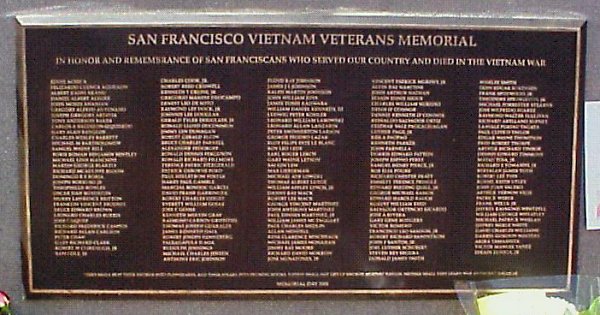
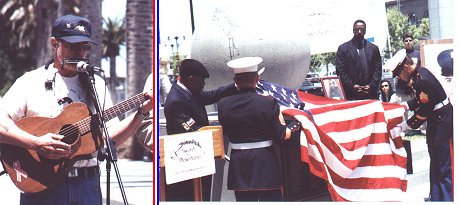
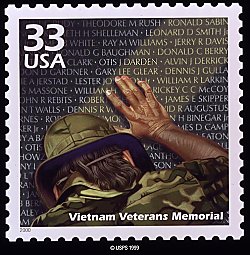 Darden saw a poster for a new collector stamp that depicts a veteran leaning against the Vietnam Veterans Memorial in Washington, D.C. Above his outstretched hand, a beam of sunlight illuminates the etched names of veterans who died in battle.
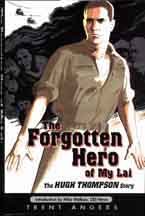 The Forgotten Hero of My Lai: The Hugh Thompson Story